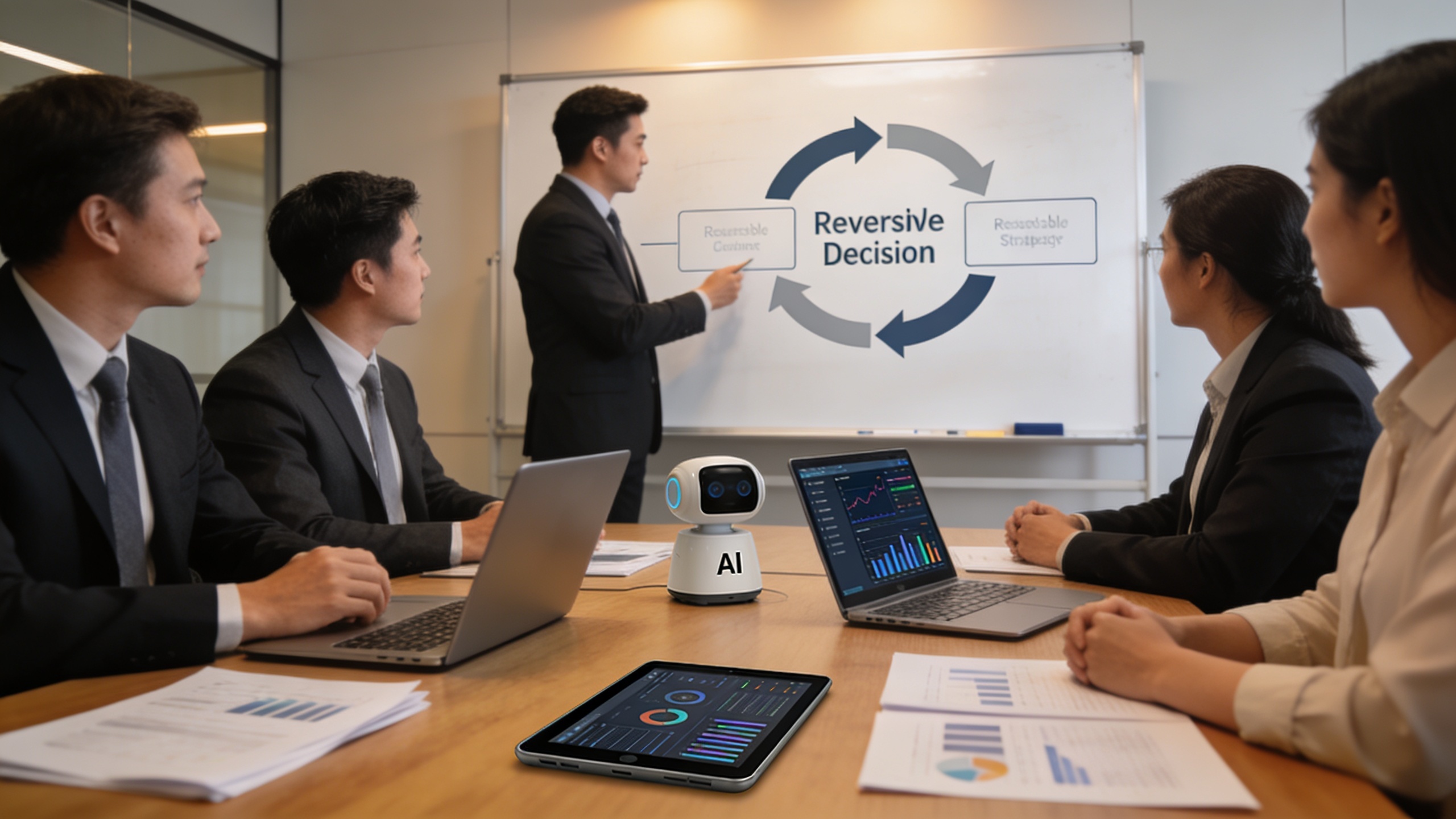
- When AI Implementation Becomes an Organizational Strength
- Three “Irreversible” Traps in AI Implementation
- Learning from Atlassian’s Design Philosophy: The Art of “Temporary Placement”
- Learning from KPMG’s Risk Management: AI as a “Decision-Making Aid”
- Practical Steps: Three “Reversible Systems” to Design Before AI Implementation
- Conclusion: Treat AI Implementation as an Experiment
When AI Implementation Becomes an Organizational Strength
On June 16, 2026, Atlassian will host its annual conference “Team on Tour Tokyo 2026” with the theme “Design Philosophy for Turning AI into Organizational Strength.” As AI permeates every aspect of business, this question is becoming increasingly critical for business leaders.
Meanwhile, KPMG Japan has launched a service that uses AI to support risk management and contribute to business decision-making. The trend of using AI as a “decision-making aid” is accelerating.
However, as a small business owner, you might be concerned about the fear of “not being able to go back” after implementing AI. Expensive tools, internal resistance, and the risk of tools being left unused—these are all “irreversible decisions.”
This article explores how to design AI implementation from the perspective of “reversible management.”
Three “Irreversible” Traps in AI Implementation
In my experience working with small and medium-sized businesses, AI implementation failures are not uncommon. Many fall into these three “irreversible traps”:
The Trap of Tying AI to a Person
This occurs when a specific employee is assigned the role of “AI person.” When that employee leaves, the know-how is lost, and the tool falls into disuse. The design must integrate AI into the workflow, not tie it to a person.
The Trap of Contracts
Introducing a high-functioning tool with a long-term contract makes cancellation difficult. Even if it doesn’t fit your needs, you’re stuck using it for the contract period. This “contract trap” severely undermines reversibility.
The Trap of Implementation Without Observation
Implementing AI “just because” without understanding the actual situation on the ground turns it into an unused “ornament.” Without deciding “what to observe” before implementation, you can’t even judge whether it’s effective.
Learning from Atlassian’s Design Philosophy: The Art of “Temporary Placement”
Atlassian’s concept of “turning AI into organizational strength” is not just about introducing tools. Their product suite (Jira, Confluence, etc.) is inherently designed to make team collaboration “observable.”
In other words, before implementing AI, you need a “system to visualize the team’s state.” This is the essence of reversible management.
For example, when considering AI for operational efficiency, start by “visualizing the current workflow.” Identify which processes take time and who is doing what. After observing this, introduce AI as a “temporary placement.”
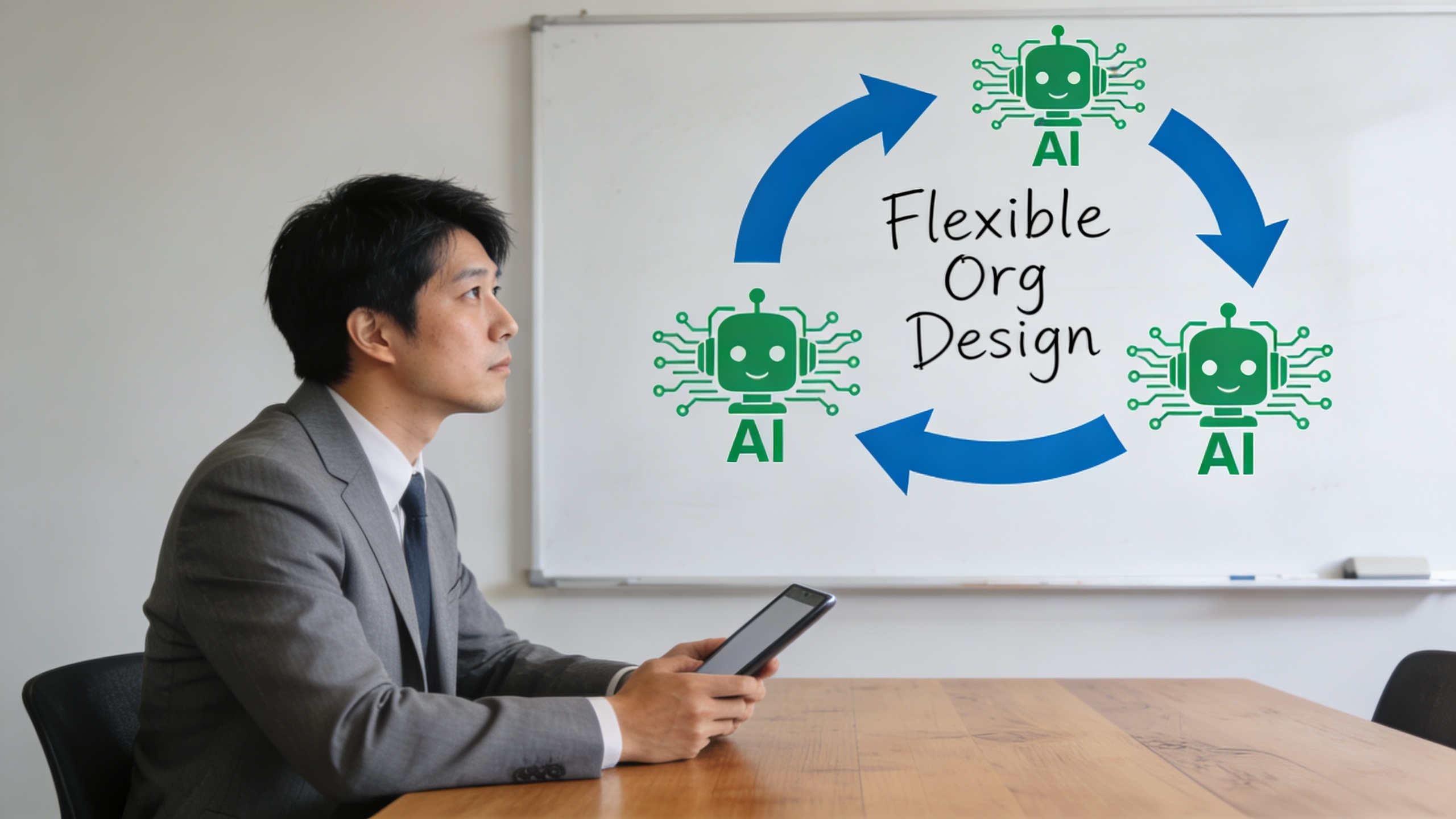
“Temporary placement” means setting an evaluation period to verify effectiveness within that timeframe. When the period ends, decide whether to continue or stop. With this “reversible design,” failure won’t result in major losses.
Learning from KPMG’s Risk Management: AI as a “Decision-Making Aid”
KPMG Japan’s AI risk management service supports business decisions—it doesn’t make them. AI provides the materials for human judgment. This stance aligns well with reversible management.
Even small businesses can use AI as a “decision-making aid.” For example, AI can detect anomalies in sales data and alert the business owner, who then makes the final decision. With this system, even if AI makes a mistake, the business owner can correct it.
The key is not to “over-rely” on AI. AI is merely a tool; the final decision rests with humans. Clearly defining this boundary significantly enhances the reversibility of AI implementation.
Practical Steps: Three “Reversible Systems” to Design Before AI Implementation
So, what specific systems should you design? Here are three key points:
Set an Evaluation Period First
When introducing an AI tool, decide in advance on a “3-month trial period.” During this time, set metrics (KPIs) to measure effectiveness, such as “reducing inquiry response time by 20%” or “lowering error rates by 10%.” At the end of the evaluation period, decide whether to continue or stop.
Start with Short-Term, Minimal Contracts
Avoid long-term contracts or large upfront investments. Choose monthly or pay-per-use tools. To maintain a “reversible” state, it’s crucial to lower the barrier to cancellation. Also, take advantage of free trial periods.
Build an Observation System First
Before implementing AI, create a system to visualize current business processes. For example, introduce a tool to track work hours or standardize weekly reports. This allows you to quantitatively compare changes before and after AI implementation.
Conclusion: Treat AI Implementation as an Experiment
Treat AI implementation as an “experiment,” not a “decision.” This is the foundation of reversible management. If it’s an experiment, failure can be seen positively as “data collected.” Even withdrawal becomes material for the next decision.
The moves by Atlassian and KPMG highlight the importance of “design philosophy” when integrating AI into an organization. It’s not the tool itself, but how you use it and how you reverse it. That design is the key to turning AI into “organizational strength.”
When considering AI implementation in your company, be sure to design a “reversible system” first. That is the first step toward sustainable management decisions.

Comments