
- The Myth That “Organizational Change Starts with Big Plans”
- Why Big Changes Become Irreversible
- Conditions for Small Habits to Change an Organization
- The Importance of “Observation” as Taught by Clinical Organization Science
- Organizational Change as an “Experiment”
- In Practice: A “Reversible Change” You Can Start Today
- Conclusion: A Reversible Organization is Born from Small Experiments
The Myth That “Organizational Change Starts with Big Plans”
When trying to change an organization, many leaders take the approach of “first, set a big policy, then roll it out company-wide.” Introducing a new evaluation system, restructuring, or refreshing the mission and vision—all of these are large-scale projects.
However, this approach carries a significant risk: once a reform starts moving, it becomes impossible to turn back.
The investment amount, accountability to internal and external stakeholders, and the expectations of those involved all pile up. This creates a psychological pressure of “we can’t stop now,” leading to continuation even when results aren’t visible. The result is unnecessary strain on the organization and employee burnout.
Today, I want to focus on two approaches: Clinical Organization Science (COS) and Fogg Tiny Habits. These methodologies, which start organizational change with “small experiments,” truly capture the essence of “reversible management.”
Why Big Changes Become Irreversible
There are three main reasons why organizational change becomes irreversible.
First, it fixes people into roles and expectations. When you appoint project leaders and promotion members, they see it as “a task tied to my evaluation,” making it difficult to withdraw.
Second, it blurs responsibility through contracts and systems. Bringing in external consultants, implementing expensive systems, and setting company-wide KPIs all make “turning back” difficult.
Third, it proceeds without understanding the actual situation. You create an ideal image of “how things should be” during the planning phase and start moving, disconnected from the reality on the ground. By the time you realize it, you’ve already spent a lot of resources.
In short, large-scale changes tend to lose reversibility.
Conditions for Small Habits to Change an Organization
This is where the Fogg Tiny Habits method comes in handy. Developed by Dr. BJ Fogg at Stanford University, this method is based on the principle that “the smaller you start a behavior, the easier it is to stick.”
When applied to an organization, the following steps can be considered.
First, anchor it to an existing behavior. For example, after the morning meeting, add a habit of “sharing one thing you want to improve today.” This alone lowers the psychological hurdle to starting a new initiative.
Next, celebrate success. When a small action is taken, acknowledge and praise it. This fosters a “culture that welcomes change” within the organization.
Then, set short evaluation periods. Decide whether to “continue or stop” on a weekly or even three-day basis. This minimizes the cost of failure.
The biggest advantage of this approach is that it’s reversible. If a habit doesn’t stick, you simply stop. It doesn’t turn into a massive organizational overhaul or a waste of budget.
The Importance of “Observation” as Taught by Clinical Organization Science
On the other hand, Clinical Organization Science (COS) takes a medical approach of “diagnosing” and “treating” organizational problems. The key is to separate “diagnosis” from “treatment”.
Many organizational changes start treatment (reform) without a diagnosis. For example, “Sales are down, so let’s change the sales structure.” But the real problem might be elsewhere.
In COS, you first carefully listen to the voices on the ground, collect data, and visualize the structure of the problem. Through this process of observation, what needs to be changed becomes clear.
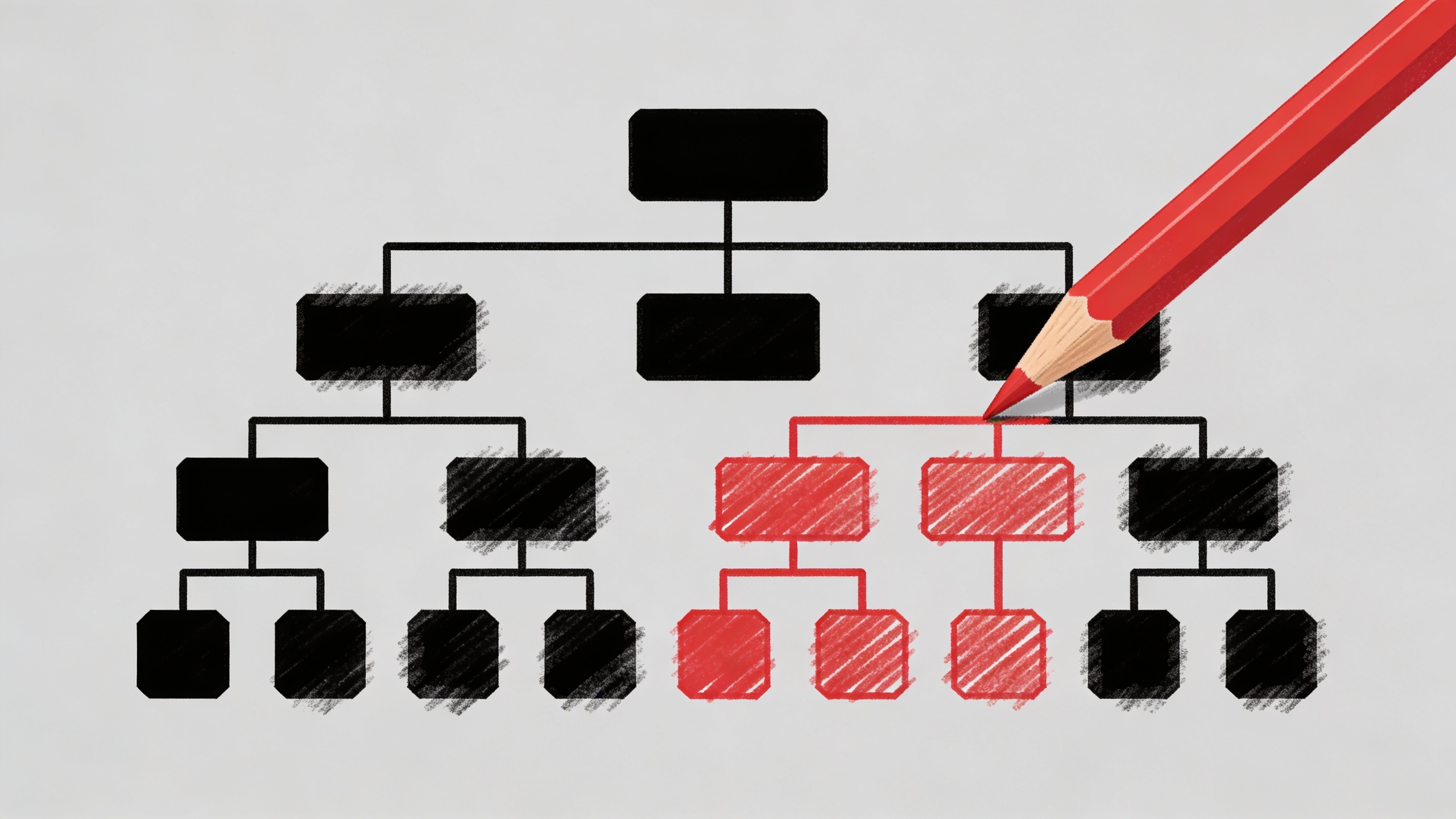
Then, treatment (reform) also starts with small interventions. Instead of a “company-wide review of the evaluation system,” you might “change the feedback method in just one department.”
This approach is also a reversible design. If the intervention isn’t effective, you can simply revert to the original state. You can verify the effect while minimizing side effects.
Organizational Change as an “Experiment”
Integrating these ideas leads to the conclusion that organizational change should be viewed as an experiment.
An experiment requires the following elements:
- Hypothesis: “Introducing this habit will improve employee engagement.”
- Verification Method: “Measure changes with a survey after one month.”
- Exit Condition: “If no effect is seen, stop.”
- Revert Plan: “Define the steps to return to the original state.”
Following this framework, even the smallest initiative becomes a valuable learning opportunity for the organization. Even if it fails, the reason becomes clear and can be used for the next hypothesis.
In Practice: A “Reversible Change” You Can Start Today
Let’s look at some concrete things you can start today.
First, start with “one department, one habit”. You can postpone a company-wide rollout. For example, in the customer support department, introduce the habit of “sharing one piece of customer feedback every day.” That’s it.
Next, simultaneously create an “observation mechanism”. Record how that habit affects customer satisfaction or response time. Without data, you can’t judge the effect.
Then, schedule time to “review every two weeks”. Discuss with the team whether to “continue, stop, or modify this habit.” This review process itself enhances the organization’s “learning ability.”
If there’s no effect, stop gracefully. If you think of it as a “two-week experiment,” the psychological burden should be lighter.
Conclusion: A Reversible Organization is Born from Small Experiments
Organizational change doesn’t have to start with a big plan. On the contrary, starting with small experiments allows you to move forward steadily while leaving room to turn back.
What Clinical Organization Science and Tiny Habits show us is the power of observation and habits. Without observation, there is no improvement; without habits, there is no sustainability.
Why not start with a small step in your organization? That one step will be the first step toward a reversible organization.

Comments