An Alternative to Relying on Special Succession Tax Breaks
When considering business succession, many SME owners first think of the “special succession tax deferral system.” This system, which defers inheritance and gift taxes, is indeed an effective tool.
However, this system has a major pitfall: you can’t go back.
Once you apply the special succession system, if you transfer the business or sell shares within a certain period after succession, the deferred taxes are levied all at once. In other words, turning back becomes extremely difficult.
That’s why the “fundamental stock value compression” and “organizational restructuring strategy” through a holding company structure are gaining attention. This approach doesn’t rely on the special succession system and enables a “reversible management” style.
Why Stock Value Compression Enables “Reversibility”
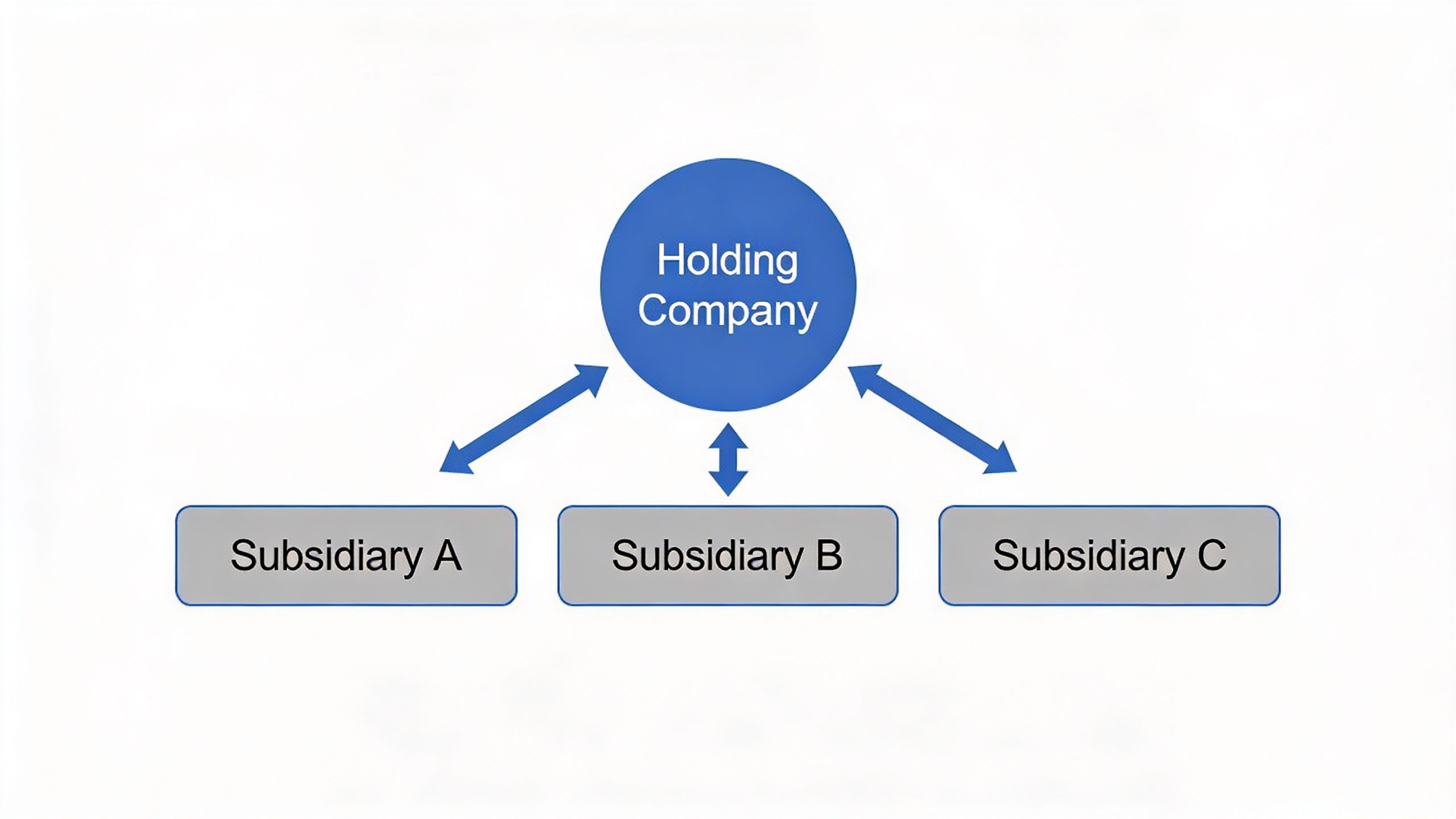
The essence of a holding company structure is placing a holding company above the operating company, which compresses the value of the shares.
Specifically, assets with unrealized gains (such as real estate or intellectual property) held by the operating company are transferred to a separate entity, bringing the operating company’s stock price closer to its pure business value. This allows for a significant reduction in the stock valuation at the time of succession.
The key here is that this method is “reversible.”
Unlike the special succession system, where “once applied, you can’t go back,” a holding company structure can be implemented in stages. If you decide, “Actually, let’s not do this,” it is theoretically possible to return to the original state.
Of course, completely reverting comes with costs. However, the difference between a “can’t go back” state and a “can go back, but at a cost” state is a world of difference in management decision-making freedom.
Holding Company Structure as an “Experiment” in Organizational Restructuring
In the “reversible management” philosophy, all management decisions are viewed as experiments. A holding company structure is no exception.
Beyond succession planning, a holding company structure offers multiple benefits:
– Efficient cash management for the entire group
– Risk diversification (failure in one business is less likely to affect others)
– Faster decision-making per business unit
– Gradual delegation of authority to successors
While enjoying these benefits, you also keep the option to “revert if it doesn’t fit.” This is the essence of “reversible management.”
Designing for Failure Invites Success
In one manufacturing case I supported, the owner was worried, “What if the holding company structure fails?”
My suggestion was: “First, create just one subsidiary and run it for six months.” Instead of a full holding company structure, we started with a partial experiment.
As a result, that subsidiary performed better than expected, and the owner, now confident that “this will work,” proceeded with a full holding company structure.
If problems had arisen during the six-month experiment, they could have simply closed the subsidiary and returned to the original state. The owner later said, “Starting it as an experiment reduced the pressure.”
“Irreversible” Points to Watch in a Holding Company Structure
That said, a holding company structure also has “irreversible” elements. It’s crucial to understand them in advance.
Tax Constraints
Share transfers and company splits associated with a holding company structure come with tax benefits. However, if you try to revert after applying these measures, you may face significant tax liabilities.
In particular, if you set up a complex scheme to meet the requirements for a qualified share transfer, reversing course can become difficult.
Relationships with Business Partners
While a holding company structure can boost the overall group’s creditworthiness, it may lower the credit standing of individual operating companies. Some business partners might say, “We can’t do business without a guarantee from the holding company.”
In such cases, returning to the original structure would require rebuilding relationships with business partners, which is no simple task.
Employee Morale
Organizational restructuring creates anxiety among employees. Many people perceive “a change in the company’s structure” as “my position becoming unstable.”
If you revert to the original structure after implementing a holding company, it can give the impression that “this company’s direction is unstable,” risking the loss of top talent.
Steps to Design a “Reversible” Holding Company Structure
So, how do you design a “reversible” holding company structure? Follow these steps.
Step 1: Assess the Current Situation and Clarify Objectives
First, accurately assess your company’s current state. Gather objective data on unrealized gains in assets, profitability by business segment, and the availability and capability of successors.
Then, clarify the purpose of the holding company structure. The optimal scheme differs depending on whether your goal is “succession planning,” “business diversification,” or “risk diversification.”
Step 2: Partial Experiment
Instead of jumping into a full holding company structure, start by spinning off just one business or set of assets into a subsidiary.
The key at this stage is to set an evaluation period. Decide on exit conditions in advance, such as “review after six months” or “revert if performance doesn’t improve by XX%.”
Step 3: Full Implementation and Ensuring Reversibility
Based on the experiment’s results, if you proceed with a full holding company structure, build in mechanisms to ensure reversibility.
Specific methods include:
– Setting up share buyback options
– Making intra-group transaction terms flexible
– Clearly outlining organizational restructuring procedures in the articles of incorporation
With these mechanisms in place, you can transition smoothly even if you decide, “We want to go back after all.”
Conclusion: Succession Is a Start, Not an End
Business succession is not the end of management but a new beginning. That’s why it’s crucial to keep a “reversible” option open.
The special succession system is certainly convenient, but once applied, it’s hard to turn back. In contrast, a holding company structure with stock value compression and organizational restructuring can be implemented in stages and is easier to make reversible.
Design management decisions assuming they might be wrong. This is the core of “reversible management.”
If you’re struggling with business succession right now, start by considering “reversible” options. Before jumping into the special succession system, why not begin the “experiment” of a holding company structure?

Comments