- Can Suntory’s Organizational Reform Be Reversed?
- 3 Cases Where SMEs “Can’t Go Back” After Organizational Reform
- 3 Conditions for a “Reversible Organizational Reform”
- The Essence of “Reversibility” Learned from Suntory’s Reform
- Specific Measures for “Reversible Organizational Reform” That SMEs Can Implement
- Summary
Can Suntory’s Organizational Reform Be Reversed?
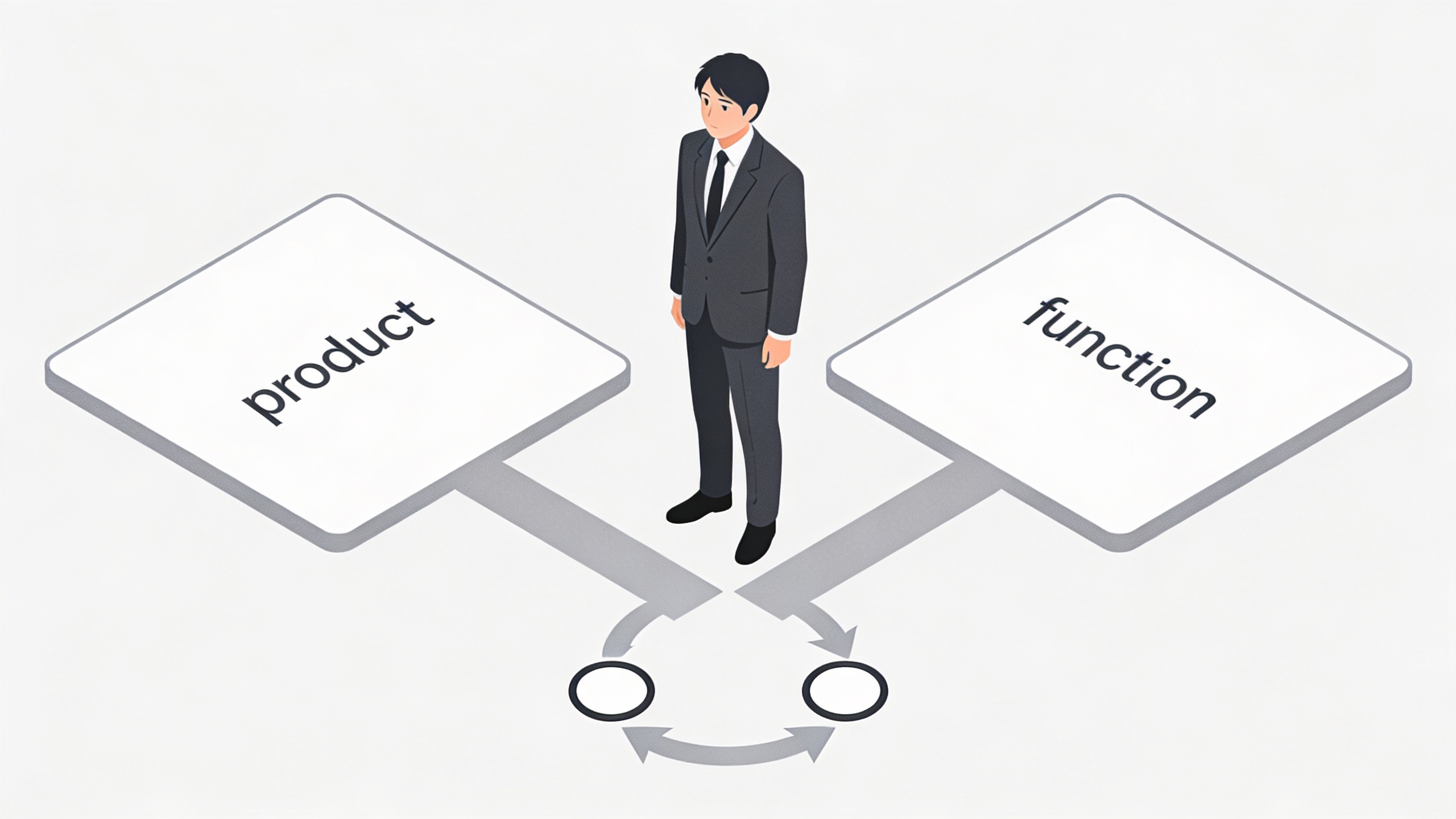
Suntory’s new president, Nishida, has sparked discussion with a bold organizational reform: shifting the alcoholic beverage business from a traditional divisional structure to a “functional axis.” Specifically, this means reorganizing the company from product categories like beer and whiskey into functions such as marketing and production.
Viewing this news through the lens of “reversible management” reveals some fascinating insights. While President Nishida himself says “transformation comes with pain,” there are hidden implications about the “reversibility” of organizational change.
Why Is the Shift to a “Functional Axis” Attracting Attention?
The alcoholic beverage industry is currently in an unprecedented period of change. With the unification of liquor taxes, diversifying consumer preferences, and most notably, the shrinking beer market, the previous system where each division independently formulated strategies made it difficult to make optimal decisions for the entire company.
That’s why Suntory chose to shift to a “functional axis.” By reorganizing into functions like marketing, sales, and production, the aim is to eliminate resource duplication and create company-wide synergies.
3 Cases Where SMEs “Can’t Go Back” After Organizational Reform
However, what SME leaders need to consider here is that organizational reform always carries the risk of being irreversible. Unlike large companies like Suntory, SMEs have limited room for error if a reform fails.
The Risk of Fixing People into Roles
The most dangerous aspect of organizational reform is fixing people into specific roles. If you decide, “You are now the Marketing Director,” it becomes difficult to reverse course if that person doesn’t perform as expected.
In Suntory’s case, the shift to a functional axis is a design where “people adapt to the function.” This is the difference between “people adapting to the function” and “the function adapting to the person.” With the former, the function can be maintained even if the person changes, increasing reversibility.
Making Responsibilities Vague Through Systems and Contracts
When reforming an organization, new roles and responsibilities are defined, but if these are ambiguous, it becomes difficult to backtrack. A vague start like “let’s just try it in this department for now” can lead to confusion about “who decides what” later on, causing the entire reform to stall.
Proceeding Without Understanding the Actual Situation
It’s dangerous to proceed based solely on the assumption that “switching to a functional axis will improve efficiency.” If you push forward with reform without observing the actual workflow on the ground, customer touchpoints, and information transmission routes, unexpected negative consequences can arise.
3 Conditions for a “Reversible Organizational Reform”
So, what are the conditions for a “reversible organizational reform” that SME leaders should learn from Suntory’s example?
1. Decide the Evaluation Period First
Before starting an organizational reform, decide “by when, and based on what criteria, will we judge it?” Setting a specific evaluation period, such as “evaluating the achievement of sales targets after three months,” allows you to objectively measure the reform’s effectiveness.
2. Clarify the Points to Observe
Decide in advance what to observe to measure the reform’s effectiveness. For example, set quantitative and qualitative indicators such as “frequency of information sharing between departments,” “speed of customer response,” and “employee satisfaction.”
3. Decide How to Revert in Case of Failure
This is the most important point. Decide in advance how far to revert and which parts to modify if the reform doesn’t go well. Clarifying the exit conditions—whether to revert everything or only modify parts—lowers the psychological hurdle.
The Essence of “Reversibility” Learned from Suntory’s Reform
President Nishida of Suntory also says, “Transformation is an experiment.” This is precisely the essence of “reversible management.” By viewing organizational reform as an “experiment” rather than a “decision,” you can minimize the damage in case of failure.
Why the Shift to a Functional Axis Is “Reversible”
At first glance, the shift to a functional axis seems like a major change, but it’s actually designed to be “reversible.” Why? Because even if the organization is restructured by function, the heads of each function still have experience from the previous divisional structure. In other words, it’s possible to revert to a divisional structure if necessary.
This is based on the principle of “not fixing people into roles.” The shift to a functional axis is a design where “people adapt to the function,” so the function can be maintained even if the people change.
Specific Measures for “Reversible Organizational Reform” That SMEs Can Implement
Finally, here are specific measures for “reversible organizational reform” that SME leaders can start implementing today.
Start with a “Trial Placement”
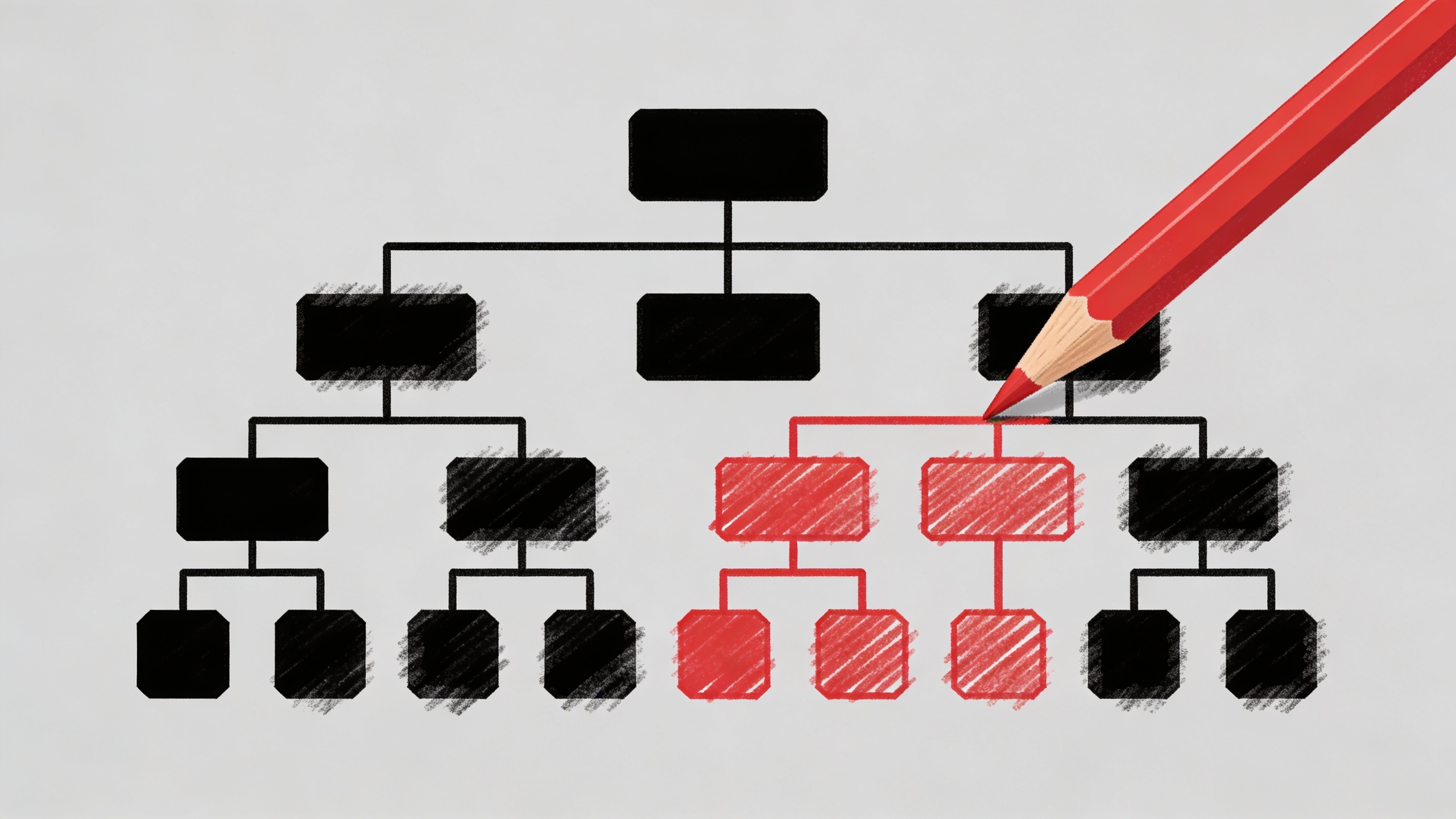
Instead of implementing organizational reform all at once, start with a “trial placement” by changing only a specific department to a functional axis. For example, reorganize only the marketing department by function and test it for three months. Based on the results, decide whether to roll it out company-wide or revert.
Start as an “Exception”
Start the organizational reform as an “exception” rather than a “full-scale change.” By starting with a form like “just this department, just for three months, we’ll try the functional axis,” you can lower the psychological cost of failure.
Decide the “Revert Method” First
Before starting the reform, be sure to decide the “revert method.” Set specific conditions, such as “if sales fall below 90% of the previous year after three months, we’ll revert to the original divisional structure.”
Summary
Suntory’s organizational reform might be a bold decision possible only for a large company. However, the underlying concept of “reversibility” is something that SMEs, in particular, should adopt.
View organizational reform as an “experiment” rather than a “decision,” and decide the evaluation period, observation points, and revert method in advance. This is the true essence of “reversible management.”
By designing with failure in mind, you can actually enable bolder challenges. Why not start your company’s organizational reform in a “reversible form”?

Comments