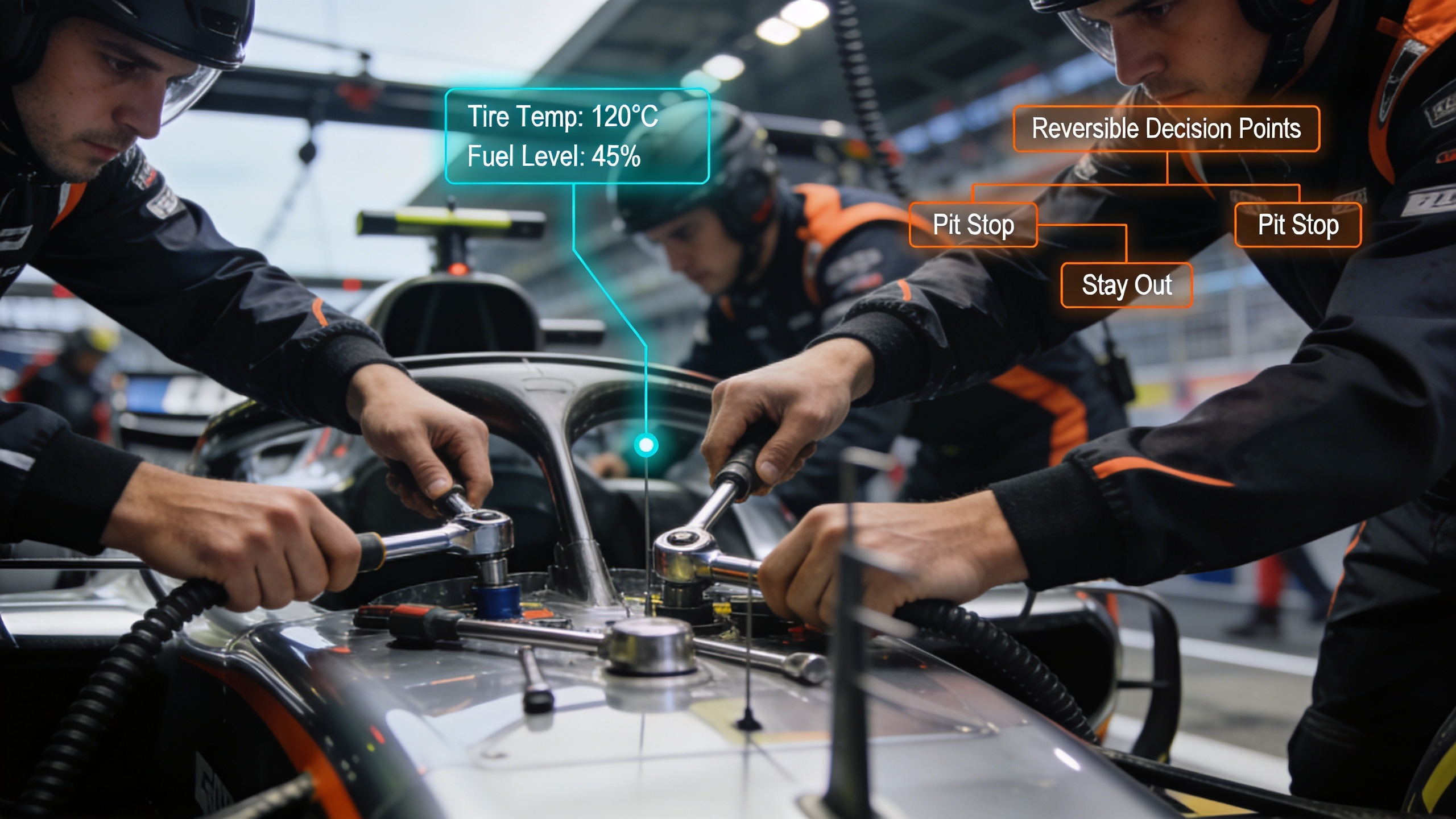
Behind the Scenes of a Legendary Comeback
Atlassian’s case study on the organizational transformation of Williams F1 is generating buzz. How did this once-struggling legendary team manage its revival? The core insight was shifting focus from “changing people” to “changing the structure of work.”
Williams languished at the bottom from 2019 to 2022, with its very survival in doubt. Yet by 2023, they climbed to 7th place, and in 2024 to 9th, fueling growing optimism for the future.
There’s much for small and medium business owners to learn from this comeback. From the perspective of “reversible management,” Williams’ transformation was infused with a design philosophy that ensured reversibility at every turn.
Change the Work, Not the People
The most notable aspect of Williams’ organizational change was its emphasis on revamping work processes rather than a major overhaul of personnel. Approximately 90% of the team members were existing staff.
This embodies one of the core principles of “reversible management”: “Look at the work, not the people.” Replacing people is a decision that’s hard to undo. When new people come in, the organization becomes dependent on their thinking and methods. If they don’t fit, you’re left searching for someone else. This is an extremely irreversible choice.
In contrast, when you change a work process, you can revert to the original if it doesn’t work. Set an evaluation period, measure the effects within that timeframe, and turn back if necessary. Williams applied this approach rigorously.
Observe with Data, Test Hypotheses
Williams used Atlassian’s tools to visualize work progress. Specifically, they made it possible to track task completion rates, delays, and bottlenecks with data.
This shifted the focus from “who is to blame” to “which process has a problem.” Blaming a person leaves you with no option but to remove them. But if you identify a process issue, you can fix just that part. If the fix doesn’t work, you can revert.
The key here is the difference between “observation” and “fixation.” Many companies, when problems arise, immediately create “new rules” or “new roles” and lock them in. Williams, however, first observed the current state with data, then made small changes and tested their effects. They left room to experiment on a provisional basis before committing.
3 Ways to Build “Reversible Design” into Organizational Change
From Williams’ example, we can extract three methods for small businesses to build reversibility into their organizational changes.
Set Clear Evaluation Periods
Before starting any organizational change, define “what needs to be achieved by when for it to be considered a success.” At the same time, set a withdrawal condition: “If no effect is seen within this period, we revert.”
In Williams’ case, they set goals for each season and rigorously evaluated their achievement. Setting an evaluation period avoids the risk of drifting aimlessly through change. If an approach doesn’t work, try another one next season. This is the foundation of “reversible design.”
Create Work Structures Independent of Individuals
Tasks that only a specific person can do become irreversible the moment that person leaves. Williams systematically identified such personalized tasks and broke them down into processes anyone could execute.
For small businesses, start by listing tasks that “only A knows.” Then, break down those tasks, separating what can be standardized from what cannot. Standardize the standardizable parts into manuals, and for the rest, set a “handover period” for gradual transition. This builds an organization where work doesn’t stop even when people change.
Design for Failure
Organizational change doesn’t always succeed. Williams experienced numerous failures. The key is to decide in advance “how far back to go” when failure occurs.
For example, when introducing a new workflow, prepare to revert to the old one. Minimize the cost of reverting by backing up data, storing manuals, and informing stakeholders. This allows you to embrace change without fear of failure.
A Reversible Organization Becomes a Strong One
Williams’ revival wasn’t achieved through flashy reforms or dramatic personnel changes, but through the steady accumulation of unglamorous process improvements. And underlying it all was the reassurance that “even if we fail, we can go back,” which enabled them to keep trying.
What I want to convey to small business owners is that the most important thing in organizational change isn’t “making the right decision,” but “creating a system that allows you to reverse decisions.” No manager always makes the right call. But with a system for reversal, even if you make a mistake, you can learn from it and try again.
Is your company’s organizational change designed to be reversible? If you feel “if this change fails, it’s over,” that’s a sign it’s not. I recommend starting by setting an evaluation period and beginning on a provisional basis.
An organization that can revert is one that becomes strong in the long run. Williams’ comeback story reminds us of this once again.


Comments