- Samsung’s 1,000-Person Business Restructuring in the US
- Three Conditions That Make Restructuring “Irreversible”
- A Framework for Designing “Reversible” Restructuring
- Why “Reversible Design” is Crucial for SMEs
- Key Takeaways from Samsung’s Case for “Reversible Restructuring”
- Conclusion: Design Restructuring with the Premise of Reversibility
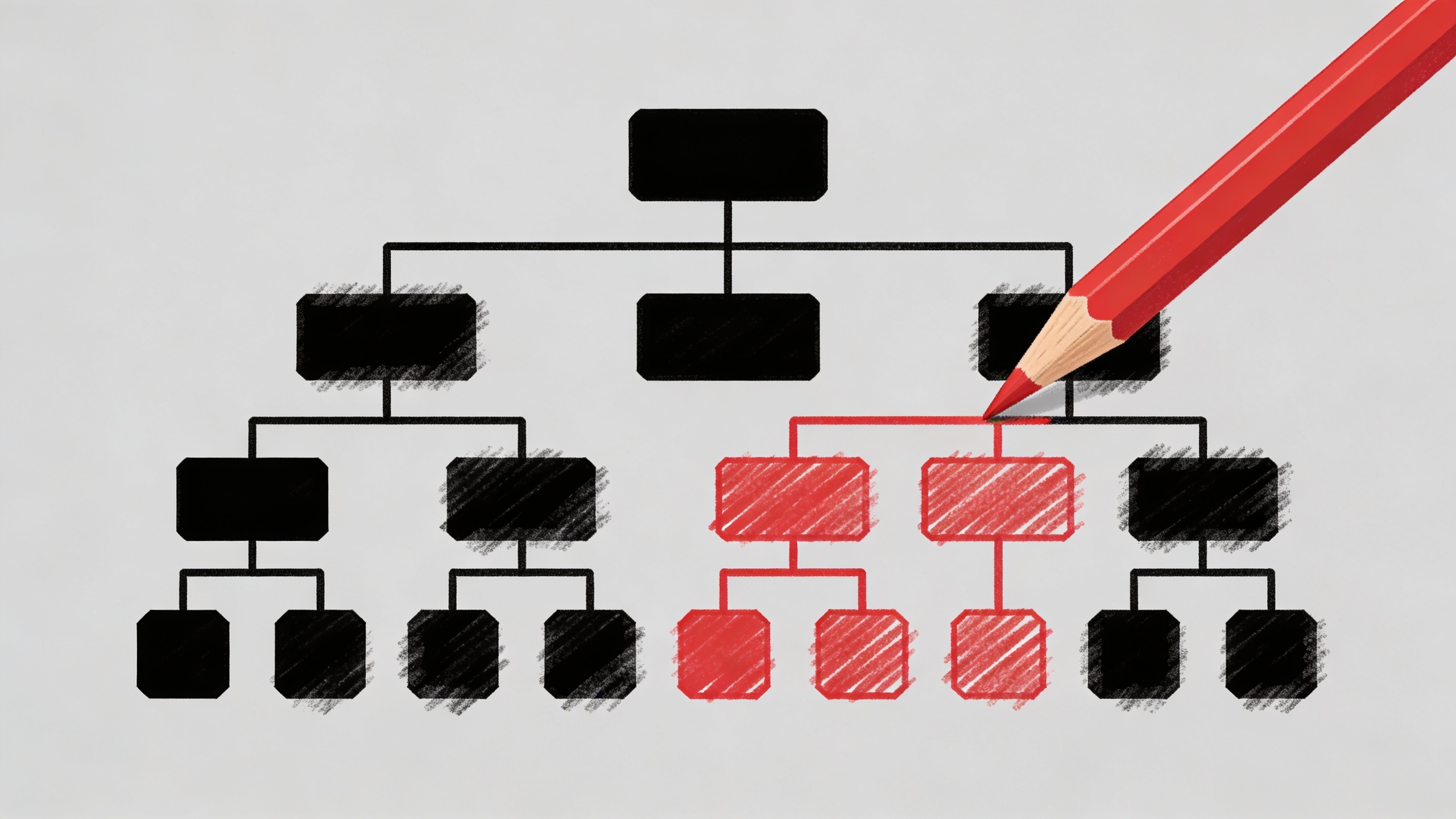
Samsung’s 1,000-Person Business Restructuring in the US
South Korea’s Samsung Electronics is moving forward with a restructuring plan for its US operations. It is expected to affect approximately 1,000 employees. This move is drawing attention as it significantly alters the structure of core businesses such as semiconductors, home appliances, and smartphones.
While this is news about a large corporation, it’s a topic that small and medium-sized business owners cannot ignore. Why? Because the success of a business restructuring depends not on “scale” but on “designing for reversibility.”
Three Conditions That Make Restructuring “Irreversible”
Among the 38+ clients I have supported, cases of failed business restructurings share a common trait: they were designed to be irreversible.
Specifically, when the following three conditions align, restructuring becomes a point of no return.
Fixing People to Roles and Expectations
As a first step in restructuring, companies often decide, “This person goes in this position.” When you fix a role to a person, it becomes difficult to replace them if they don’t perform as expected. The feeling of “I had such high expectations” clouds judgment.
In Samsung’s restructuring, they are reportedly considering reassignment and relocation for affected employees. It’s commendable that they are thinking about restructuring in terms of business units rather than fixing people to roles.
Making Responsibilities Vague Through Contracts and Systems
During restructuring, it’s tempting to hastily sign agreements, thinking, “Let’s just get a contract in place.” Proceeding with vague areas of responsibility leads to disputes later when things don’t go as planned. Contracts should be written with the premise of reversibility.
Proceeding Without Understanding the Reality
Before deciding, “This business is in the red, so let’s sell it,” you need to break down whether it’s truly unprofitable and which parts are losing money. If you proceed with restructuring without grasping the reality, you can’t reverse course even if you later realize, “Actually, it was profitable.”
A Framework for Designing “Reversible” Restructuring
So, how can you create a restructuring that allows for reversibility? Here is a framework I practice.
Set the Evaluation Period First
Before starting the restructuring, decide “when to evaluate it.” Three months, six months, one year. By setting the evaluation timing in advance, you can make decisions based on facts, not emotions.
Even in Samsung’s restructuring, setting evaluation periods allows for mid-course corrections. For SMEs, reviewing progress every three months is realistic.
Define Exit Conditions
Predefine the conditions under which you will exit: “If things get this bad, we pull out.” Define these with specific metrics like revenue, profit margin, or customer satisfaction.
A key point when setting exit conditions is to also include “who makes the decision.” If the owner decides alone, emotions can take over. Create a system with objective decision-makers, such as a third party or the board of directors.
Think About How to Reverse First
Consider in advance what you would do to “return to the original state” after restructuring. For personnel allocation, contracts, and systems, create a “reversal procedure manual.”
This isn’t about “assuming failure,” but about “being prepared to handle any situation.” In fact, in many of the companies I’ve supported, having this manual allowed them to make early course corrections.
Why “Reversible Design” is Crucial for SMEs
Unlike large corporations, SMEs face a higher risk of being unable to recover from a single failure. That’s precisely why a reversible design is so important.
Because Resources are Limited
SMEs have limited people and capital. Once they head in the wrong direction, it takes time to recover. A reversible design minimizes this risk.
Because Decision-Making is Fast
SMEs can move quickly based on the owner’s single decision. However, this also means mistakes can be significant. With a reversible design, you can move swiftly but also reverse course quickly if you make a mistake.
Because the Organization is Small
In a small organization, each person’s role is significant. Without a reversible design, one person’s mistake can shake the entire organization.
Key Takeaways from Samsung’s Case for “Reversible Restructuring”
Because Samsung’s restructuring is an example from a large corporation, there is much that SMEs can learn from it.
Proceed in Stages
Don’t try to change everything at once. First, test it in a specific department or region. After seeing the results, expand it company-wide. This is the foundation of reversible restructuring.
Simulate the Impact in Advance
Simulate in advance which departments will be affected and to what extent by the restructuring. In particular, carefully assess the impact on sales and customer satisfaction.
Ensure Thorough Communication
Carefully explain the purpose and process of the restructuring to all stakeholders. By sharing “why we are restructuring,” “what the impact will be,” and “when we will evaluate it,” you can reduce anxiety and confusion.
Conclusion: Design Restructuring with the Premise of Reversibility
Business restructuring is by no means something that “must not fail.” On the contrary, designing it with the premise of failure actually increases the probability of success.
Samsung’s restructuring is a large-scale event affecting about 1,000 people, but it’s also news that reminds SME owners of the importance of “reversible design.”
If you are considering a business restructuring for your company, first decide on the evaluation period and exit conditions. Then, create a procedure manual for how to reverse course.
Doing just that will significantly reduce the risks of restructuring. Reversible management is by no means “running away.” Rather, it is a strategy for sustainable growth.
Leaving room to “go back.” That is one of the most important management judgments that SME owners should master.

Comments