Why Creating a Specialized Organization Carries the Risk of “No Turning Back”
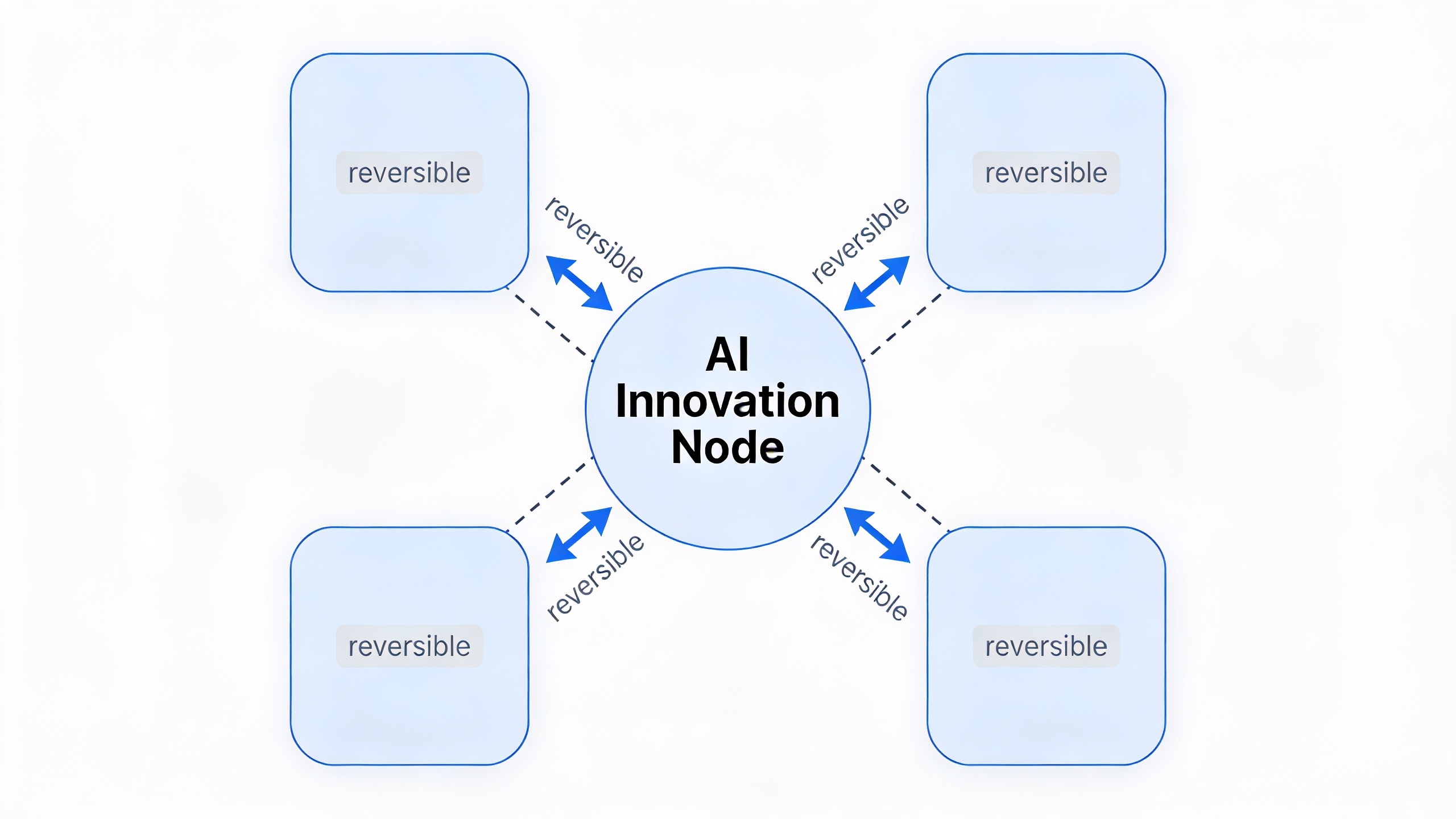
株式会社NEWh recently announced the launch of “AI Innovation Node,” a cross-functional specialized organization to support AI-driven transformation and new business development. The intent—gathering AI talent in one place to leverage their expertise—is understandable. However, as a small-to-medium business owner, I can’t help but feel a certain unease about establishing such “specialized organizations.”
Why? Because the decision to create a specialized organization often creates a state of “no return.” You gather people, fix their roles, and allocate a budget. Once that process begins, reversing the organization becomes extremely difficult.
The Inherent Risk of Gathering “AI Talent”
Many companies fall into the trap of collecting “people who can do AI” and leaving everything to them. But this approach carries clear risks.
First, AI talent has very high market value, and the risk of them being poached by other companies is ever-present. The more dependent the organization becomes on them, the greater the damage when they leave.
Second, there’s the risk of the AI organization becoming a “black box” within the company. Communication with the front line suffers due to jargon, and decisions are made in areas invisible to management. Before you know it, management decisions are delegated to the AI organization, and you’ve reached a point of no return. This is a very dangerous scenario.
Learning from NEWh’s “Temporary Placement” Design Philosophy
So how does NEWh’s “AI Innovation Node” avoid these risks? The key point is that this organization is designed as a “cross-functional specialized organization.”
This means it’s not fixed to a specific department but rather flexibly assigns talent on a project-by-project basis. In other words, it functions not as a fixed resource of “AI talent,” but as a “fluid resource” that allows you to borrow AI expertise as needed.
Three Design Points to Ensure Reversibility
For this kind of organizational design, the following three points are crucial.
First, set an evaluation period. The “AI Innovation Node” should start as an experimental entity, not a permanent organization. Set a deadline, such as six months or a year, and verify results within that period. This way, if the expected results aren’t achieved, it’s easy to dismantle the organization and return to the original state.
Second, avoid “fixing” talent. Instead of locking excellent AI talent into a dedicated “AI organization,” introduce a system of “dual roles” where they can return to their original departments or participate in other projects. This increases talent fluidity and prevents organizational rigidity.
Finally, decide on the “way back” in advance. If the “AI Innovation Node” becomes unnecessary or needs to change direction, establish rules in advance for how personnel will be returned to their original departments and how the budget will be handled. This is the core of “reversible management.”
A Practical Approach for SMEs Creating AI Organizations
When small-to-medium enterprises create an AI organization, they don’t need to build a large-scale structure like a big company. Instead, the following “experimental” approach is effective.
Start as a “Project Team”
Instead of creating a permanent organization like an “AI Department” from the start, begin as a “project team” to solve a specific problem. Set a timeframe of three to six months. Members can have dual roles. Use this team to verify whether AI is truly effective for solving your company’s challenges.
Leverage External Resources
Before hiring AI talent in-house, consider using external specialized organizations like NEWh. They are professionals in “reversible” design. By borrowing external expertise, you can explore AI’s potential while avoiding the risk of locking talent into your company.
Document What Worked and What Didn’t
The most important thing in running an AI organization is to accurately record not only successes but also failures—what was achieved and what wasn’t. This record becomes the basis for deciding whether to “reverse” the organization. If AI doesn’t deliver the expected results, analyze why and decide whether to dismantle the organization or restructure it in a different form. Through this process, the organization learns and grows.
A “Reversible Organization” Is the Competitive Edge in the AI Era
AI technology evolves daily. Today’s optimal solution may become obsolete tomorrow. That’s precisely why organizations need to be designed with “reversibility.”
NEWh’s “AI Innovation Node” can be seen as one model case. The mindset of “temporarily placing” rather than “fixing” an organization, as they do, is essential for management going forward.
Before creating an AI organization, business leaders, please first think about “how to reverse it.” That very thought process should be your most powerful weapon for surviving the AI era.

Comments