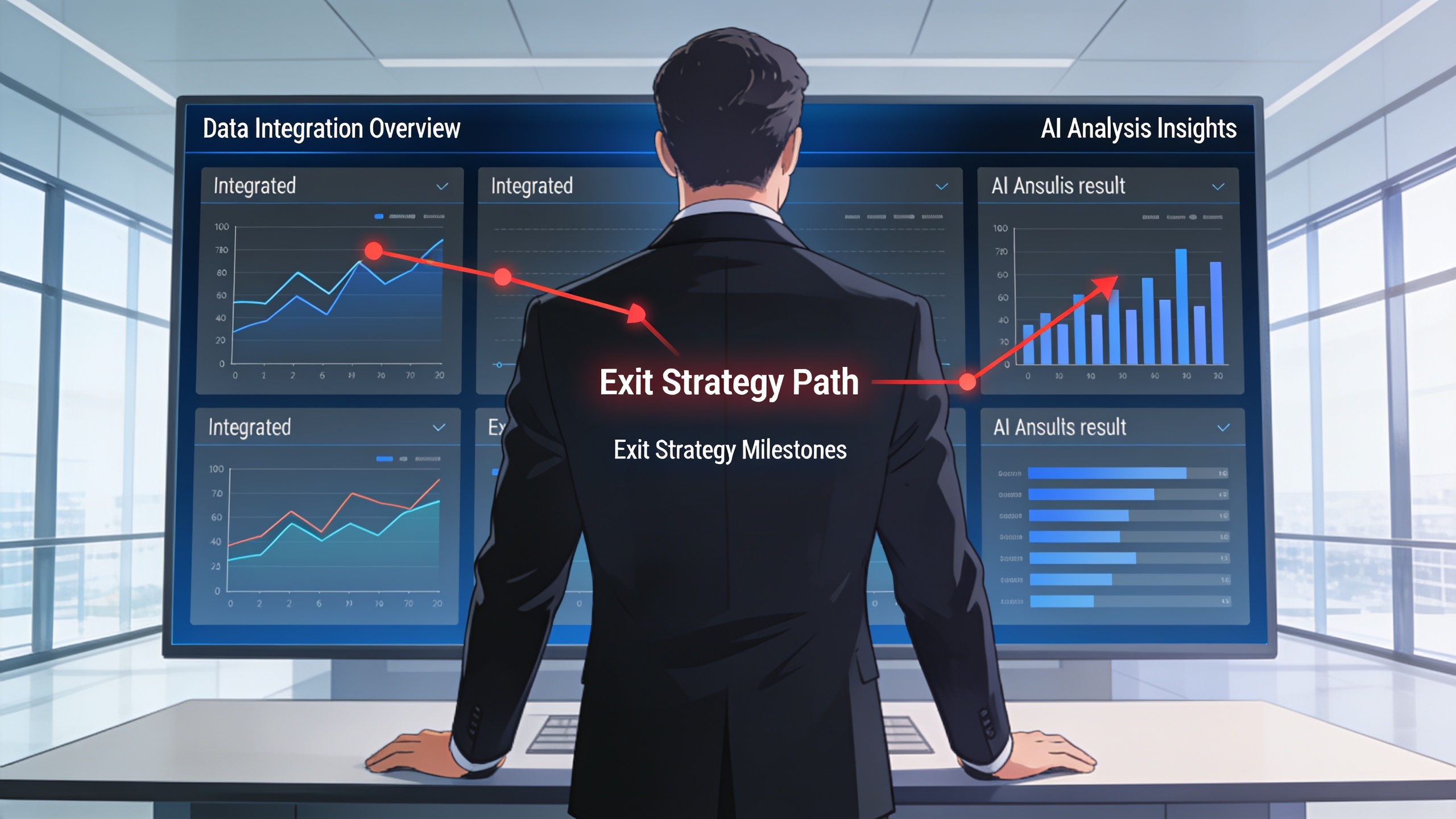
The Business Decision to “Not Expect” from AI
Mercarto Inc.’s “Data Integration Awareness Survey” revealed an intriguing figure: 24.3% of EC executives responded that they “don’t expect much from AI.”
How should we interpret this number? It’s easy to dismiss them as “outdated leaders.” But I see it differently. These 24.3% of executives may be carefully weighing the “irreversible decision” of adopting AI.
The Irreversibility That “AI Adoption” Brings
At first glance, deciding to adopt an AI tool seems like a “forward-thinking move to embrace the latest technology.” However, it harbors several irreversible aspects.
First, contracts. Many AI tools require annual or long-term contracts, with cancellation fees for early termination. Particularly with SaaS-based AI tools, while initial costs may appear low, termination can incur significant expenses.
Second, integration into business processes. Modifying existing workflows to leverage AI often comes with high costs to revert. Once employees start relying on the AI tool, saying “let’s stop using it” can cause confusion on the ground.
Third, data migration issues. Transferring data accumulated in an AI tool to another system is not easy. Especially when customer or purchase data has been used to train the AI, you can’t simply “undo” that.
The Value of “Not Expecting”
So, are executives who don’t expect much from AI doing nothing? Not necessarily. They are choosing to “wait.”
In business decisions, “waiting” can sometimes be the wisest choice. For small and medium-sized enterprises (SMEs) in particular, where to allocate limited resources is a matter of survival. Before investing in AI, first understand the state of your own data. This is the first step toward “reversible management.”
Data Integration as the Foundation for “Reversibility”
Another key point from Mercarto’s survey is the importance of data integration. Many executives who don’t expect much from AI are facing the reality that their company’s data isn’t integrated in the first place.
Even if you adopt AI without integrated data, the benefits will be limited. Worse, forcing unintegrated data into AI training risks producing inaccurate analysis results. This could lead to irreversible failures.
Data integration itself has a “reversible” nature. It can be done step by step, with room for course correction along the way. Start with a specific department, verify results, and expand gradually. Even if it fails, confining it to that department minimizes the overall impact.
Adopting AI as an “Experiment”
The next step for executives who don’t expect much from AI is to frame AI adoption as an “experiment” rather than a “decision.”
Specifically, design reversibility as follows:
Set an evaluation period. Decide on a clear timeframe, like three or six months, to verify results. At the end of the period, decide whether to continue or withdraw. It’s crucial to define these “exit conditions” upfront.
Limit the scope. Instead of company-wide adoption, test AI in a specific department or task. This allows you to control the impact if it fails.
Back up your data. Before migrating data to an AI tool, always save the original data separately. This ensures you can return to the original state at any time.
The Resolve Behind the “24.3%”
The fact that 24.3% of executives don’t expect much from AI is by no means negative. Rather, it’s evidence that they aren’t swept up by hype and are calmly assessing their company’s reality.
In business decisions, the most dangerous move is acting “because everyone else is doing it.” Just because AI adoption is the norm doesn’t mean forcing an unsuitable tool into your company won’t cause irreparable losses.
When I work with client companies, I always ask one question: “Can this decision be reversed?” The same applies to AI adoption. Before implementing, think about how you would exit. This is the essence of “reversible management.”
Three Checkpoints to Enhance Reversibility
When considering AI adoption, confirm the following three points:
Contract terms and cancellation conditions. What is the minimum contract period? Are there cancellation fees? Check these in advance to understand the exit costs.
Data portability. Can data accumulated in the AI tool be migrated to another system later? Whether the tool has data export functionality is also a key factor.
Dependence on the tool. Over-reliance on an AI tool can halt operations if it becomes unavailable. Position AI as a supplementary tool and maintain a system where humans can make decisions—this is key to a “reversible” design.
Starting Management from “Not Expecting”
Mercarto’s survey results teach executives the importance of having the “courage not to expect from AI.” Before jumping on the latest technology, strengthen your company’s data foundation and create a reversible adoption plan. This process leads to sustainable management.
“Not expecting” from AI is by no means a backward-looking stance. Rather, it’s a wise business decision to prevent future failures. Move forward step by step while keeping a path to retreat. That’s the attitude required of SME executives.

Comments