
The “Can We Go Back?” Decision for Giant Corporations
Microsoft is reportedly considering restructuring its Xbox business, with options including a spin-off or joint venture.
While this involves a global company, it’s not irrelevant for small and medium-sized business owners. In fact, because of their smaller scale, understanding the essence of this decision is even more critical.
Why? Because for smaller companies, the cost of reversing a decision is much higher. Large corporations have the luxury of “trying it out experimentally and stopping if it doesn’t work,” but smaller businesses don’t have that leeway.
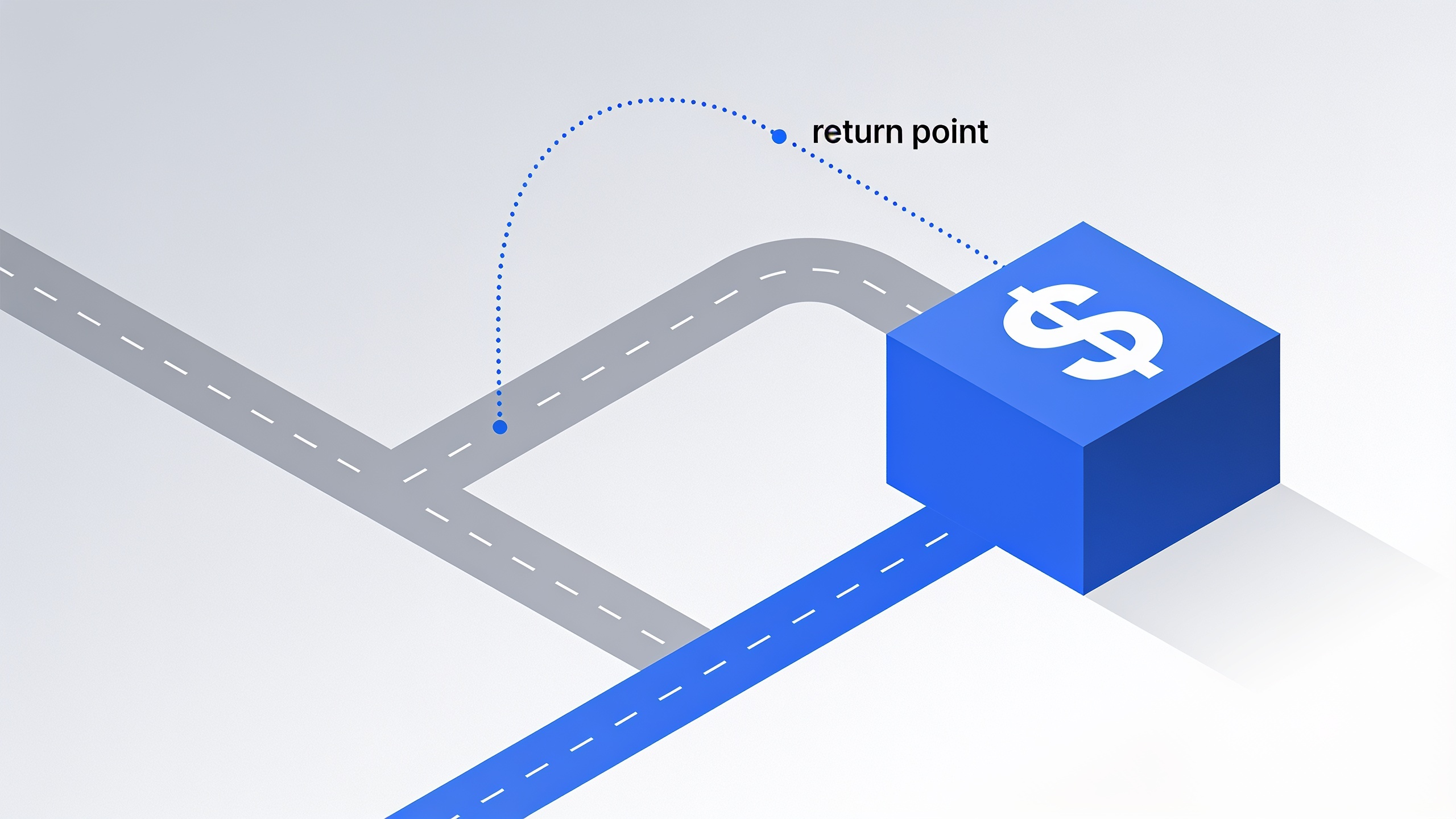
So, what’s the solution? The answer is to “start in a way that allows you to go back from the beginning.”
The Fear of an “Irreversible Decision” Like a Spin-Off
The restructuring plan for the Xbox business includes options like a spin-off or joint venture. These are decisions that, once executed, are very costly to reverse.
Let’s consider a spin-off as an example. Establishing a subsidiary creates several “irreversible elements”:
- New corporate registration and permits/licenses
- Employee transfers and changes to salary structures
- Renegotiating contracts with business partners
- Separating systems and databases
Reversing these would require the same amount of time and cost. In other words, a spin-off is a “decision with low reversibility.”
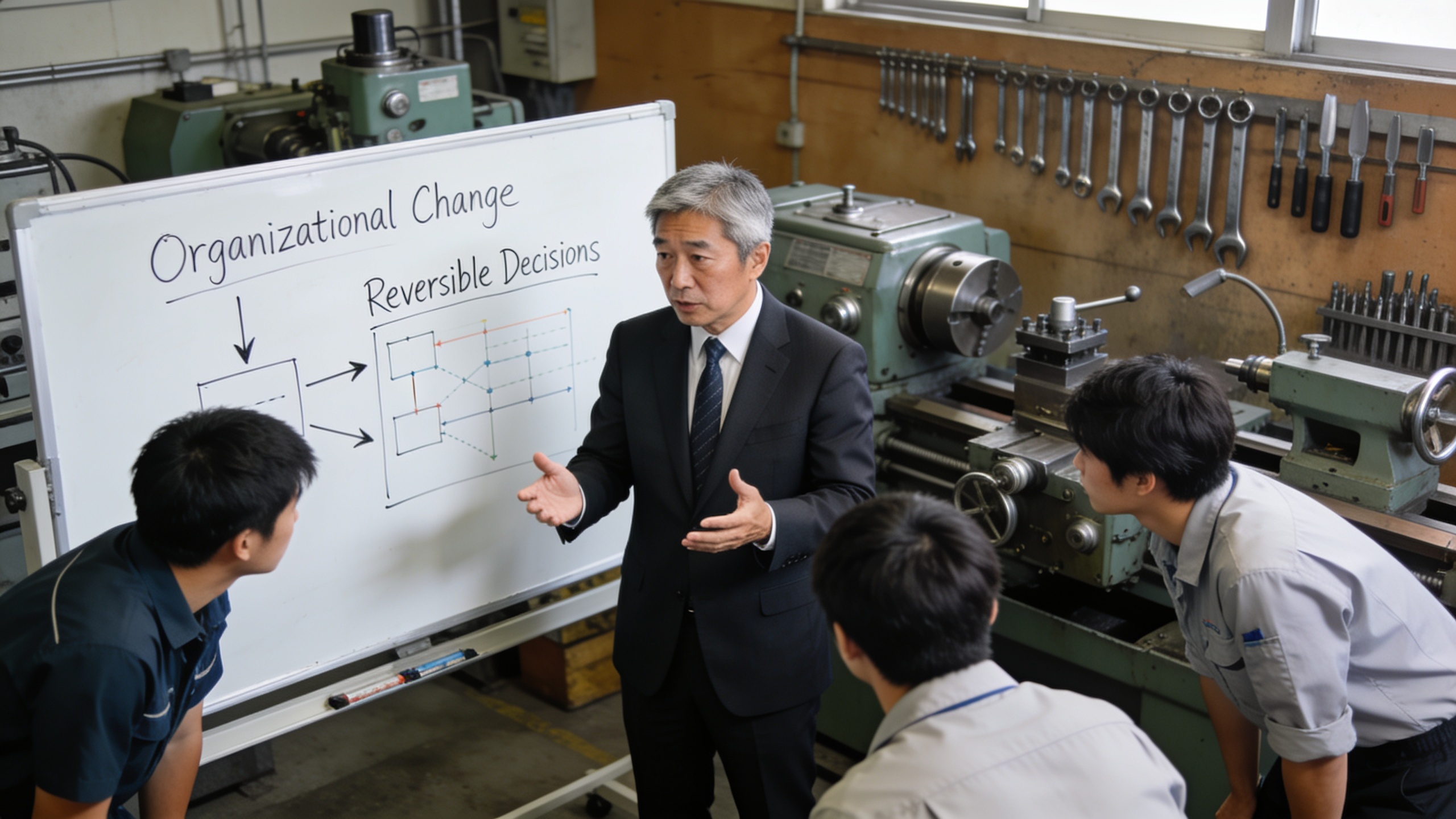
Of course, there are cases where a spin-off is necessary to increase business independence. However, by taking a “reversible experiment” step first, you can avoid major failures.
3 Steps for a “Reversible Experiment”
So, how do you do this specifically? Here are the three steps for a “reversible experiment” that I recommend to my clients.
Step 1: Start with a Pseudo-Separation
You don’t need to separate the legal entity from the start. First, create a “pseudo-independent organization” within the company.
Specifically, you can try methods like:
- Granting independent budgets and authority as a business division
- Moving the office to a different floor or building
- Creating an independent profit and loss statement within the company’s accounting system
This way, if it doesn’t work out, it’s easy to return to the original structure. It might just involve personnel changes or moving desks.
Step 2: Clearly Set an Evaluation Period
Before starting the pseudo-separation, decide “by when, and what needs to be achieved for it to be considered a success.”
For one manufacturing client I worked with, they launched a new business as an internal venture. They set the following conditions:
- Evaluation period: 6 months
- Monthly sales target: $7,000 (approx. 1 million JPY)
- At least 10 customers
They decided in advance that if these conditions weren’t met, they would shut down the business. As a result, they achieved their goal in 3 months and are now operating as a formal subsidiary.
The key is to decide on the “exit conditions” upfront. This allows you to make decisions without being swayed by emotions.
Step 3: Design the Reversal Process in Advance
Think about “how to reverse it if it fails” beforehand.
For the manufacturing client mentioned earlier, they designed the reversal process like this:
- Return the person in charge to their original department
- Integrate customer data into the head office system
- Use the vacated office as a warehouse for the head office
With this preparation, the decision to exit can be made faster. The peace of mind that comes from knowing “you can go back” actually encourages taking on challenges.
3 Benefits of “Reversible Decisions”
Designing reversible decisions offers the following advantages.
Reduced Psychological Burden
Knowing that “you can go back even if you fail” significantly reduces the psychological burden on management. Personally, this mindset was a great support when I decided to pivot my business during the pandemic.
Just thinking, “If it doesn’t work, I can go back,” dramatically lowers the hurdle for making a decision.
Increased Speed
Reversible decisions speed up the decision-making process. This is because you don’t need to aim for perfection.
With an attitude of “let’s try it first, and if it doesn’t work, we’ll go back,” you don’t need to spend a lot of time deliberating. Some challenges only become apparent once you actually start moving.
Promotes Learning
Reversible decisions promote organizational learning. This is because failure can be seen as a “learning opportunity” rather than a “bad thing.”
In one IT company, through repeated experiments with new businesses, their strengths and weaknesses became clear. Although the business itself was eventually discontinued, the experience was applied to another venture.
Management that Reduces “Irreversible Decisions”
Some management decisions are inevitably irreversible, such as company mergers, M&A, or large capital investments.
However, many other decisions can be designed to be “reversible.” Shouldn’t the restructuring of the Xbox business also start with creating a pseudo-independent organization within the company for experimentation, rather than immediately spinning it off?
I believe that small and medium-sized business owners, in particular, should adopt this way of thinking. Because the impact of failure is greater and the cost of reversal is higher for them than for large corporations.
“Reversible management” is by no means timid management. Rather, it is about building a foundation for actively taking on challenges.
Why not start with a “reversible experiment” in your company too?
Comments