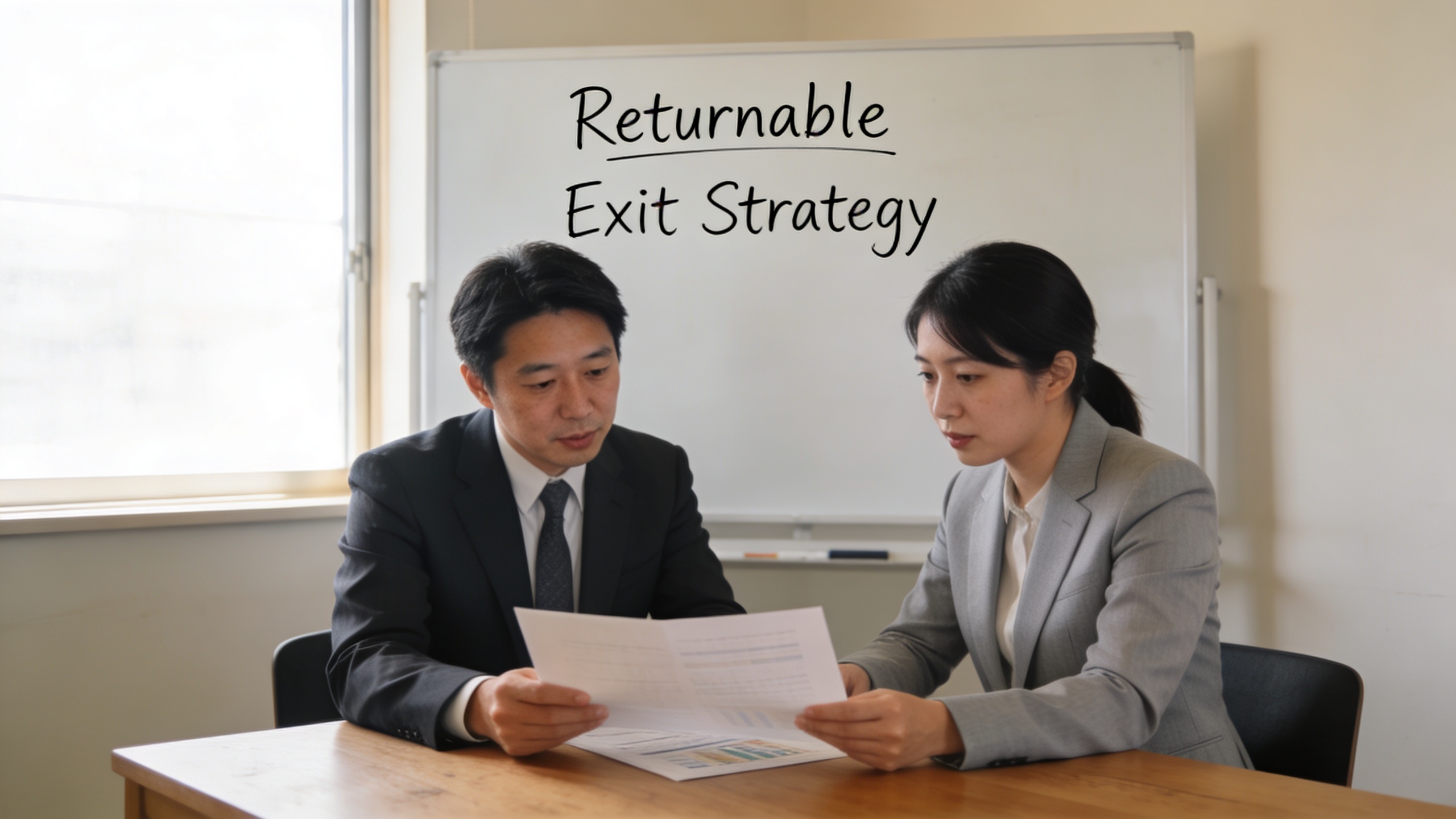
- The Irreversibility Hidden in the Decision to “Sell Your Company”
- The Idea of Treating a “Sale” as an “Experiment”
- Concrete Example of a “Reversible Design”: Pre-Determining Exit Terms
- Post-Sale Management Decisions: Three Traps That Eliminate Reversibility
- A New Form of M&A Brought by “Reversible Management”
The Irreversibility Hidden in the Decision to “Sell Your Company”
For many small and medium-sized business owners, the decision to “sell your company” is a defining moment, often seen as the culmination of a life’s work. Recently, news broke that a book on M&A titled *”This Is What It Means to Sell Your Company”* topped bookstore rankings. This is evidence that, in the era of the great succession, many business owners are beginning to consider M&A as a realistic option for business succession.
However, viewing this news through the lens of “reversible management” raises an important question.
Is the decision to “sell your company” truly “irreversible”?
Many business owners tend to view M&A as a “final destination.” They struggle with succession issues, consider their employees’ futures, and ultimately decide to “let go of the company.” In this process, they are so focused on imagining their own and the company’s post-sale reality that they lose sight of reversibility—the question, “What if this decision is wrong?”
However, as a management consultant, I firmly believe that M&A is precisely a topic where a “reversible design” should be built in advance. Why? Because once executed, M&A is extremely difficult to reverse. It fundamentally alters the organization, relationships, trust with business partners, and the owner’s life plan.
The Idea of Treating a “Sale” as an “Experiment”
The basic principle of “reversible management” is to treat management decisions as “experiments” rather than “final determinations.” M&A is no exception.
Of course, making a share transfer or business transfer a “completely reversible experiment” is not realistic. However, you can increase reversibility by incorporating conditions for post-sale management involvement and exit terms into the contract beforehand.
For example, consider the following conditions:
– Retain the right to remain involved with the company as a management advisor for a certain period after the sale.
– Set a buyback option if performance falls below a certain level.
– Agree in detail on conditions regarding employee treatment and the preservation of corporate culture.
These perspectives view the sale not as an “end,” but as a “transition to the next phase.” If the post-sale situation differs from expectations, it leaves room for the owner to re-engage in management. Or, in the worst-case scenario, it secures the option to buy the company back.
This is by no means saying, “hesitate to sell.” Rather, it is because of a reversible design that owners can confidently make the significant decision of M&A.
Concrete Example of a “Reversible Design”: Pre-Determining Exit Terms
A client in the manufacturing industry I previously supported decided on M&A due to a lack of a successor. However, instead of simply selling the company, they incorporated the following conditions into the contract with the buyer:
– Remain as a part-time advisor for three years after the sale.
– If performance deteriorates by more than 20% within two years of the sale, gain the right of first negotiation for a buyback.
– Maintain the status quo for contracts with key business partners for at least two years post-sale.
This client designed the M&A “assuming failure.” As a result, the collaboration with the buyer was successful, and performance improved. However, even if things hadn’t gone as planned, they had secured conditions for “returning.”
This case shows that a “reversible design” gives owners peace of mind and enables better M&A negotiations. Conversely, if you brace yourself for irreversibility, you may become timid at the negotiation table and risk accepting unfavorable terms.
Post-Sale Management Decisions: Three Traps That Eliminate Reversibility
Even after an M&A deal is closed, owners face new decisions. Pay special attention to these three traps:
Fixing People into Roles and Expectations
After a sale, an owner might become fixed in a special status as “founder.” This can create friction with the new management team, and if the owner decides to step back, it becomes difficult to reverse course. It’s important to treat roles as “temporary” and review them regularly.
Making Responsibilities Vague Through Contracts and Systems
Vague conditions in the sale agreement can lead to future problems. Specifically, clauses regarding performance guarantees and employee treatment must be clearly defined; otherwise, if a disadvantage arises for either party, it could escalate into a legal dispute.
Proceeding Without Understanding the Actual Situation
If the new management team pushes reforms without understanding the on-the-ground reality post-M&A, it can trigger employee backlash and lead to declining performance. The owner should play a role in listening to the voices on the ground and bridging the gap to the new management team for a certain period after the sale.
A New Form of M&A Brought by “Reversible Management”
This recent news shows that M&A is becoming a common option among small and medium-sized business owners. However, you don’t have to think of that decision as “irreversible.”
View the act of “selling your company” not as a final destination in life, but as an “experiment” for a new phase. To do this, it is essential to design reversibility in advance and determine exit terms.
If you are considering M&A, take a moment to pause and think:
“If I make a mistake with this decision, how far can I come back?”
Preparing an answer to that question is what truly enhances the reversibility of management decisions. And it will protect not only you, but also your employees, business partners, and the future of your company.


Comments