Samsung’s Choice: “Reversible Focus”
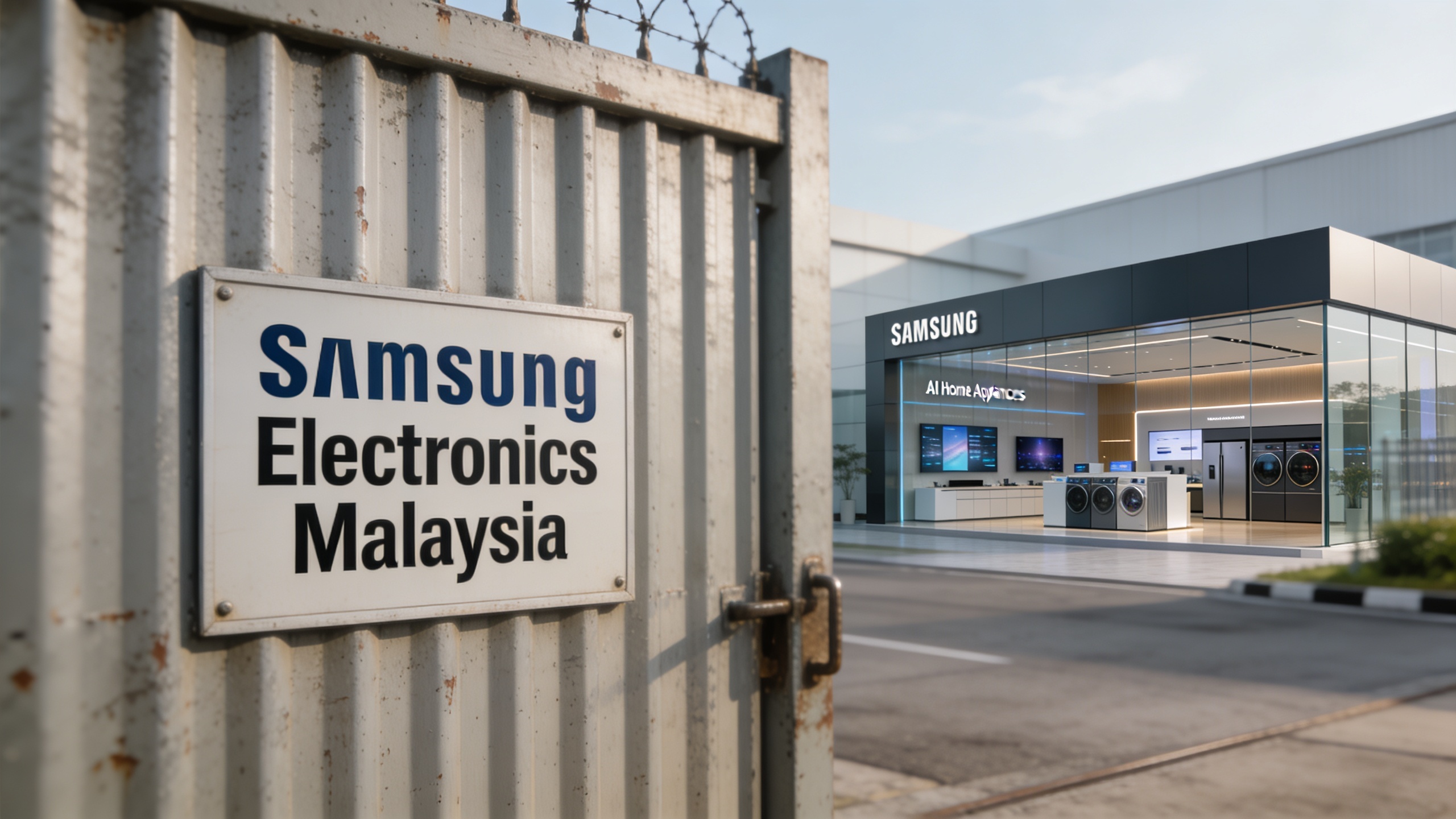
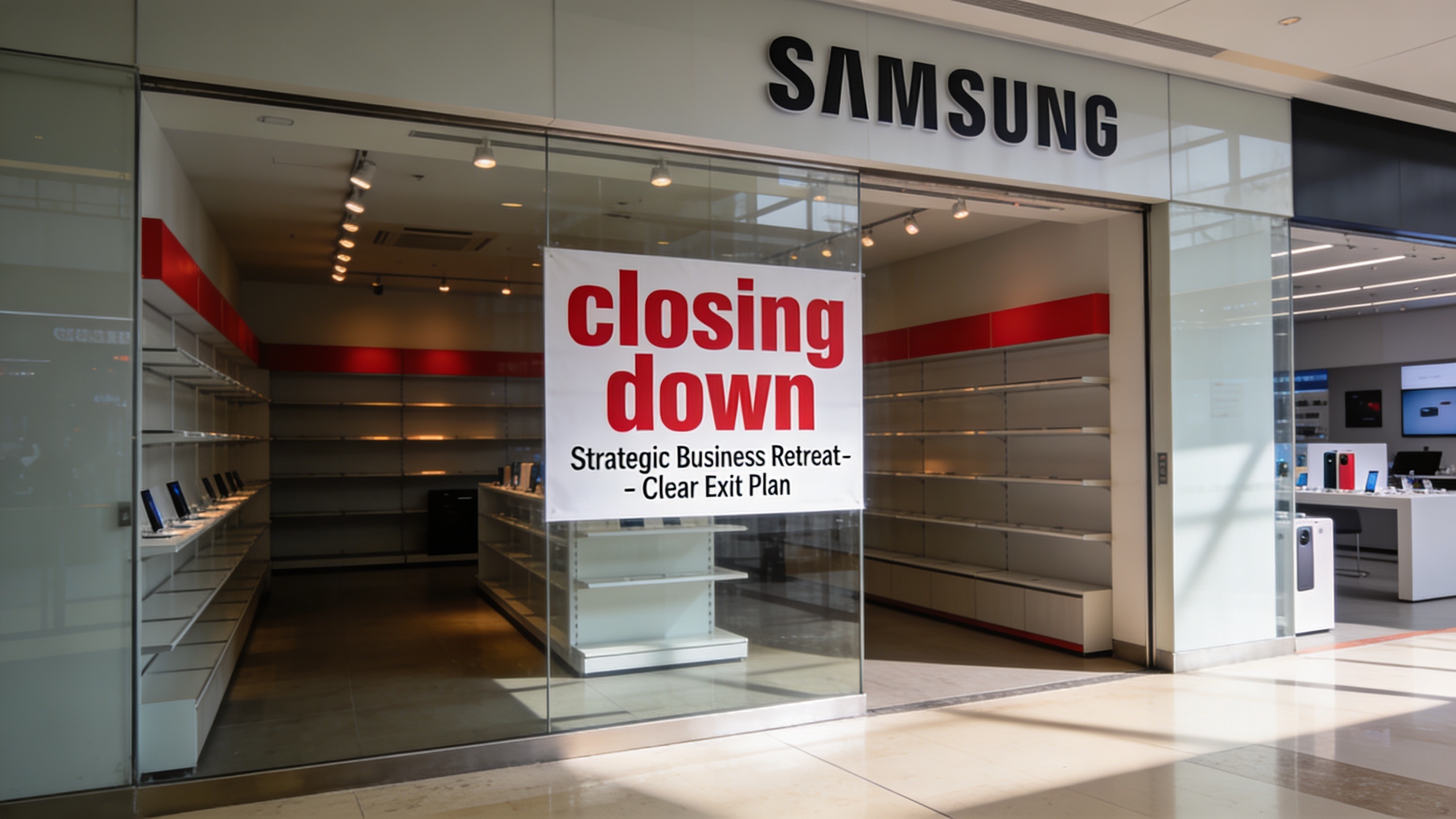
Samsung Electronics has reportedly closed its home appliance factory in Malaysia, shifting some production to external contractors. At the same time, it has announced a concentrated investment in premium AI appliances.
At first glance, this looks like a “withdrawal,” but I see it as a prime example of “reversible focus.”
Closing a factory seems like an irreversible decision. Recovering equipment investment and eliminating jobs would cost a fortune to restore to the original state. However, Samsung positions this decision as “streamlining for focus.”
The key here is the perspective: not “what to stop,” but “what to keep in order to stop something else.”
The Reversibility Hidden Between “Focus” and “Withdrawal”
Many business leaders tend to view “focus” and “withdrawal” as binary opposites. However, there is a gradient between them.
Viewing Samsung’s decision as “reversible focus” reveals three key points.
1. Outsourcing as a “Reversible Option”
The important point is that instead of completely closing the factory, Samsung switched part of its production to external contractors. Outsourcing is an option that allows for a relatively quick return to in-house production if needed.
Owning a factory involves high fixed costs, and once closed, restarting is difficult. However, with outsourcing, you can adjust production volume or return to in-house production simply by changing contracts.
For SMEs, letting go of attachment to in-house factories or equipment and leveraging external resources can preserve “room to return.”
2. Clarifying the “Focus Area”: Premium AI Appliances
Samsung has not only clarified “what to withdraw from” but also “what to focus on.” The premium AI appliance sector is an area where the company can leverage its strengths and where market growth is expected.
The key here is to view the focus area as an “experiment.” Samsung is going all-in on AI appliances, but if market reactions differ from expectations, it will likely review its portfolio again.
Focus is not “an irreversible decision,” but “an act of temporarily placing resources in the area expected to yield the highest returns at this moment.”
3. A Blueprint for “Reversible Withdrawal”
Here is a blueprint for “reversible withdrawal” that we can learn from Samsung’s case:
- Set withdrawal conditions in advance: Establish criteria for when to withdraw from a business, such as a certain level of performance decline.
- Decide on resource allocation after withdrawal: Have a concrete plan for where to redirect resources freed up by the withdrawal.
- Keep reversible options like outsourcing: Instead of a complete withdrawal, partially externalize operations to facilitate future return.
Practicing “Reversible Focus” in SMEs
You might think that the case of a giant company like Samsung is too large-scale for SMEs. However, the essence of the thinking is the same.
A manufacturing client I supported was forced to decide whether to close its least profitable division among three. Instead of shutting it down immediately, they first switched part of its production to outsourcing and reassigned the remaining staff to the core business.
As a result, because the quality from the outsourcer was lower than expected, they returned to in-house production six months later. If they had closed the division from the start, they couldn’t have reversed it.
By choosing “reversible withdrawal,” this client was able to approach the restructuring with the peace of mind that even if they failed, they could start over.
Three Checkpoints for “Reversible Focus”
When considering focus and withdrawal in your company, check the following three points:
1. Is there “room to return” in the area you’re withdrawing from?
Instead of completely selling or closing, consider whether partial outsourcing or business contraction is possible.
2. Is the focus area designed as an “experiment”?
Before committing all resources to the focus area, set up a step to test market reactions with a small experiment.
3. Is there an “evaluation period” for the withdrawal decision?
Set a deadline like “withdraw if results don’t appear by this date.” Focus without a deadline is just maintaining the status quo.
“Reversible Focus” Strengthens Management
Samsung’s factory closure is by no means a “defeat.” Rather, it is a sign of the courage to let go of past successes for future growth.
What I want to convey to SME leaders is that focus and withdrawal should be seen not as “irreversible decisions” but as “reversible experiments.”
Even if you close a factory, you can retain production capacity through outsourcing. Even if you downsize a division, you can utilize the talent in other departments. Even if you sell a business, the experience can be applied to the next venture.
There is no such thing as an “irreversible” management decision. What makes it irreversible is a design that excludes the option of “returning” from the start.
Leaders who can design “reversible focus,” like Samsung, are the ones who will survive in this era of rapid change.
Comments