
- When This Decision Becomes a Problem
- What Happens in Organizations Where Failures Aren’t Shared
- Failures Are Handled as “Individual Events”
- No Incentive to Share Exists
- Sharing is Perceived as “Accusation”
- Why Organizations Weaken When They Can’t Share Failures
- Re-learning the Same Mistakes Repeatedly
- Decision-Making Premises Are Not Updated
- Superficial Stability Masks Internal Decay
- What Happens in Organizations That Can Share Failures
- The Threshold Where Failure Sharing Stops Functioning
- Questions to Reconsider This Decision
When This Decision Becomes a Problem
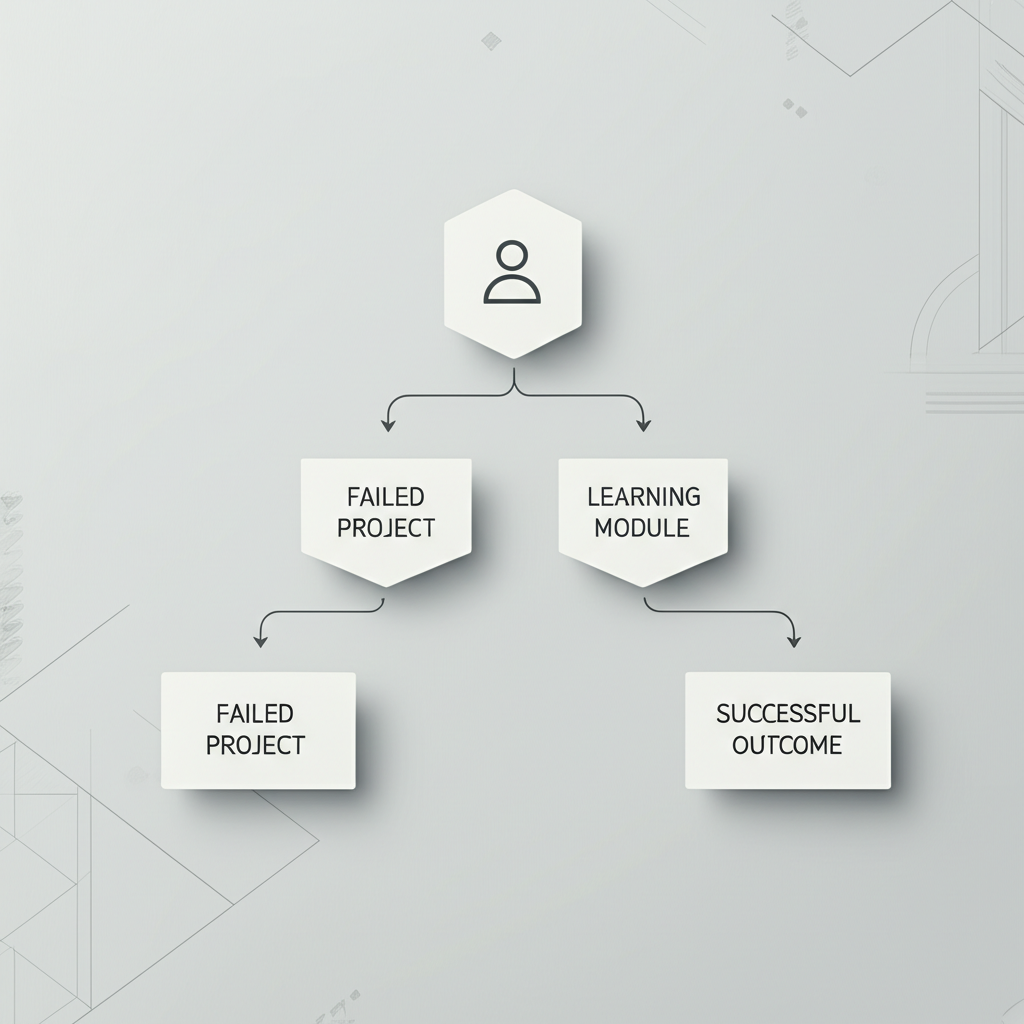
When a strategy or decision doesn’t go as planned, it may be superficially “resolved,” but handled individually without being shared across the organization. As a result, similar failures are repeated elsewhere, and an atmosphere easily develops where people think, “No need to bring it up,” “It’s a hassle to rehash it,” or “It’s quicker to handle it as a personal issue.” The real question here is not whether failures occur, but whether the organization has a circuit (feedback loop) for sharing them.
What Happens in Organizations Where Failures Aren’t Shared
In organizations where failures don’t surface, the following phenomena often occur simultaneously.
Failures Are Handled as “Individual Events”
Mistakes and unexpected events are dealt with on a case-by-case basis, and the root causes are never analyzed from an organizational perspective. Consequently, failures are consumed as individual learning experiences rather than being recognized as structural issues within the organization.
No Incentive to Share Exists
If sharing a failure brings no recognition and may even be disadvantageous, not sharing becomes the rational choice for the individual.
Sharing is Perceived as “Accusation”
Sharing a failure is treated as an act of criticizing someone’s judgment or design, or as disruptive behavior. As a result, the unspoken rule that failures are not discussed becomes embedded in the organizational culture.
Why Organizations Weaken When They Can’t Share Failures
Re-learning the Same Mistakes Repeatedly
Without access to past failures, each problem is treated as if it’s the first time. Learning stops at the individual level, and the quality of organizational judgment and management decisions does not improve.
Decision-Making Premises Are Not Updated
When the fact that an assumption was wrong is not shared, decision-making continues based on outdated premises. This leads to a growing gap with reality and a loss of the agility crucial for SMEs.
Superficial Stability Masks Internal Decay
While problems may appear non-existent, the organization’s capacity for self-correction is declining. In this state, resilience to market changes weakens, making sustainable growth difficult.
What Happens in Organizations That Can Share Failures
When an organization can share failures without collapsing, the following conditions are generally in place. Failures are not directly linked to evaluation or treatment; they are analyzed as issues with business processes, premises, or design, not as personal faults. Furthermore, when shared failures are referenced in subsequent decisions, they are treated not as warnings but as valuable material for updating judgment.
The Threshold Where Failure Sharing Stops Functioning
When the following conditions are met, sharing tends to become a hollow ritual.
- Nothing changes even after sharing.
- The decision-making authority (the recipient of delegated power) is ambiguous and not updated.
- Shared content is not recorded and simply flows away.
In this case, even if the act of sharing exists, it does not influence decision-making or organizational design.
Questions to Reconsider This Decision
For healthy, reversible organizational management, it is effective to regularly ask the following questions.
- Who knows about the most recent failure, and where?
- Is that failure preserved in a form that can be referenced for the next decision?
- Is sharing a failure a risk or an asset?
- Are shared failures successfully updating our premises and designs?
If you cannot answer these, the problem likely lies not in the quantity of failures, but in the structure where failures don’t remain within the organization (a non-learning organizational design).

Comments