The “Returnable Line” That Separated Subscription Success and Failure
Subscription businesses are all the rage. At first glance, they seem like an ideal business model offering stable revenue. However, in reality, companies are split into two camps: those that achieved great success and those that pulled out. Where does the difference lie?
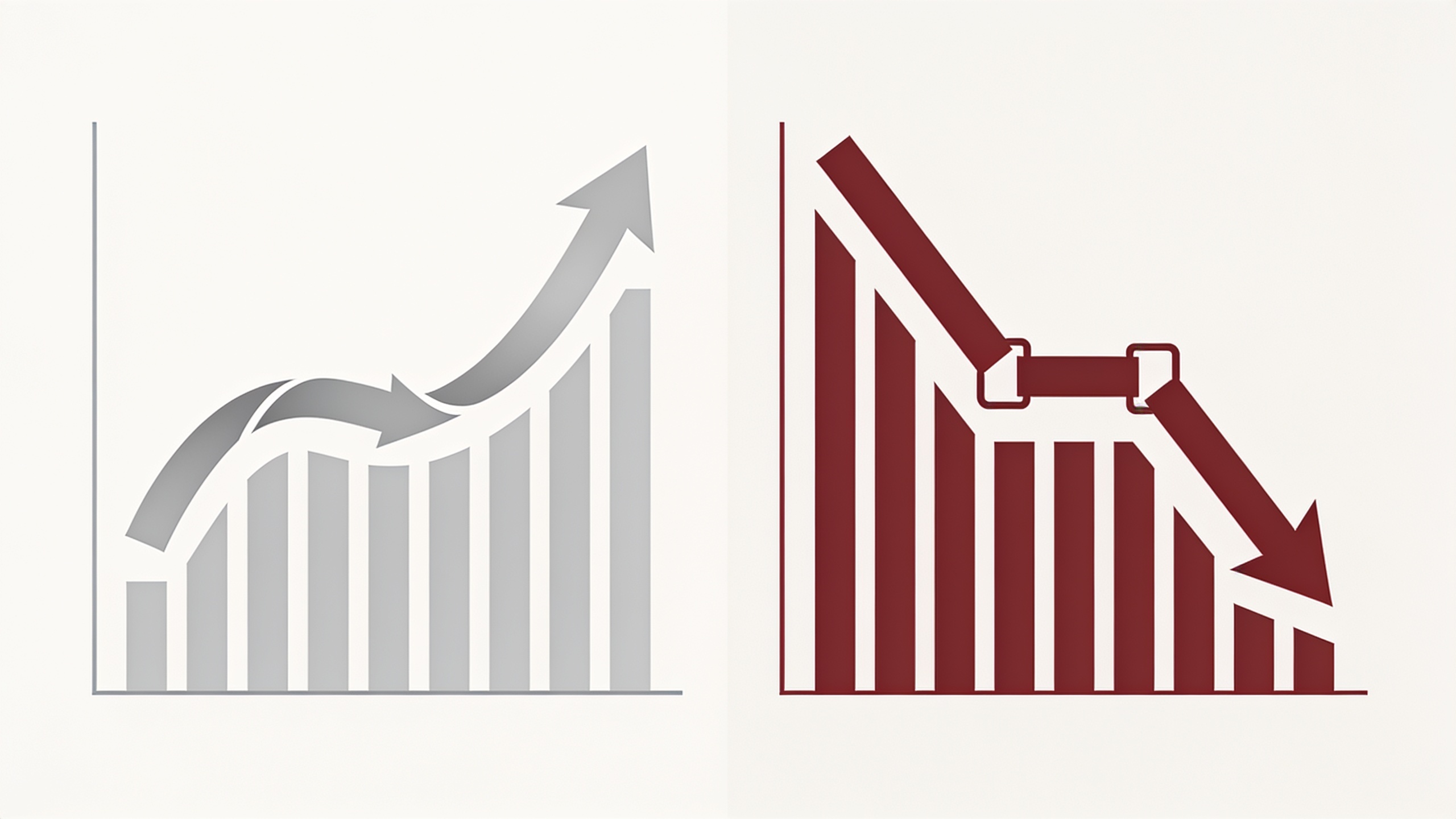
In short, it comes down to whether they drew a “returnable line” from the start. Successful companies began subscriptions as an “experiment,” not a “commitment.” Failed companies started them as a “decision.”
This contrast is also evident in the yakiniku (Japanese BBQ) industry. While 57 yakiniku restaurants went bankrupt, Yakiniku King posted record profits. Even across different industries, the essence of the decision-making is the same.
Designing Fixed Cost Reversibility
The most common trap in subscription businesses is increasing fixed costs. To start monthly billing, you might introduce a dedicated system, hire a customer success team, and bring content production in-house. All of these are fixed costs that are difficult to reverse.
Successful companies design for “returnability” here. Instead of renting a system, they choose a cancellable SaaS. Instead of hiring full-time employees, they start with contractors or fixed-term staff. For content production, they first outsource to test the waters.
Failed companies do the opposite. They immediately purchase a dedicated system outright, hire 10 full-time employees, and jump into in-house production. When the subscription doesn’t take off, they lose their way back.
The reason for Yakiniku King’s success is the same. The company designs its store operations in a “returnable” way. Its expansion strategy involves first testing with pilot stores, then focusing on areas with a high probability of success. Exit conditions are also decided in advance.
“Temporarily Placing” Customer Contracts
Another pitfall of subscriptions is long-term contracts. Assuming annual contracts or auto-renewals makes it harder for customers to leave, but it also creates the risk that the service won’t improve.
Successful companies “temporarily place” contracts. They start with monthly contracts, improve the service based on customer feedback, and can quickly adjust if the churn rate is high.
Failed companies immediately assume annual contracts. Even if the service is incomplete, they lock customers in with contracts. As a result, customer dissatisfaction builds up, and word-of-mouth reputation suffers. Even if they want to turn back, they’re trapped by contract obligations.
The same structure appears in yakiniku restaurant bankruptcies. Many failed restaurants made expensive interior investments at opening and signed long-term leases. Even when customer traffic slows, the high cost of withdrawal prevents them from moving. In contrast, Yakiniku King minimizes interior investment and clearly defines exit conditions.
Pre-Determining Exit Conditions
The most important thing in a subscription business is to decide exit conditions in advance. This is the fundamental principle of “returnable management”: designing for failure.
Specifically, decide the following three things in advance:
– Evaluation period: How many months will you use to judge?
– Evaluation metrics: What defines success or failure?
– Exit conditions: What numbers will trigger a withdrawal?
Successful companies decide these in advance. When exit conditions are met, they withdraw based on facts, not emotions. This minimizes losses.
Failed companies don’t decide exit conditions. Even when the service doesn’t take off, they procrastinate, saying, “Let’s wait a little longer.” As a result, losses swell, making withdrawal even more difficult.
Yakiniku King also clearly defines exit conditions. If a store’s profit margin falls below a certain level, it closes immediately. This prevents it from holding onto unprofitable stores.
Three Questions to Draw Your Returnable Line
Before starting a subscription business, answer these three questions.
Question 1: How reversible are your fixed costs?
Systems, personnel, content production. Is there a “returnable line” for all of these? If there are many irreversible fixed costs, it’s a “decision,” not an “experiment.”
Question 2: Can you temporarily place customer contracts?
Can you start with monthly contracts? Annual contracts or auto-renewals can wait until you see customer reactions.
Question 3: Have you decided exit conditions in advance?
Evaluation period, evaluation metrics, exit conditions. If you haven’t decided these in advance, it’s a “gamble,” not “management.”
Three Benefits of Returnable Management
Drawing a returnable line offers three benefits.
1. Lower psychological costs
The peace of mind that “I can return even if I fail” encourages taking on challenges. Managers can try new businesses without fear of failure.
2. Lower actual costs
Pre-deciding exit conditions minimizes losses. It prevents losses from escalating due to procrastination.
3. Accelerated learning
Starting as an “experiment” allows for objective analysis of results. You can structure the factors behind success and failure and apply them to future decisions.
Summary: Subscription is a “Means,” Not an “End”
A subscription business is ultimately a means to generate revenue. The goal is to provide value to customers and build a sustainable business.
Successful companies started subscriptions as an “experiment” and drew a returnable line. Failed companies started them as a “decision” and lost their way back.
The contrast in the yakiniku industry is the same. Yakiniku King achieved record profits through management decisions that drew a returnable line. The 57 bankrupt yakiniku restaurants failed because they didn’t.
Is a returnable line drawn in your business? Take another look. It’s precisely because there’s a returnable line that you can take bold risks. That is the essence of returnable management.


Comments