- What the Worst-to-First Turnaround Reveals
- Why They Didn’t Blame “People Problems”
- Designing Change as an “Experiment”
- Avoid Fixing, Maintain a “Temporary” State
- Three Traps That Make Organizational Change Irreversible
- Practical Advice for Small and Medium Business Owners
- Conclusion: Reversible Change Is Sustainable
What the Worst-to-First Turnaround Reveals
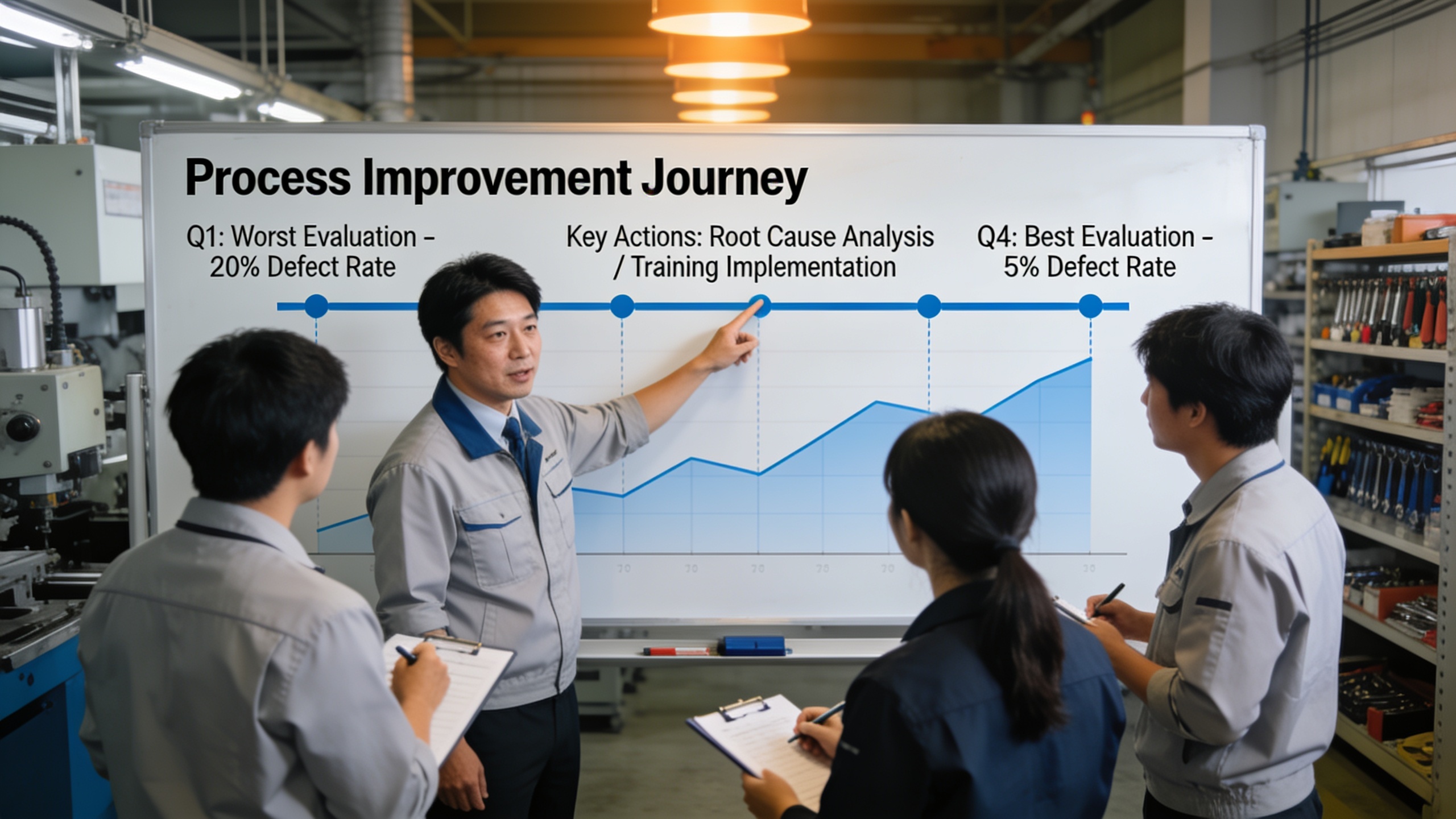
An organization that received the worst evaluation in its prefecture has surged to first place within a short period, even earning national recognition. This case is drawing attention not just as a success story, but as a powerful example of “reversible management” in action—offering valuable insights for small and medium business owners.
Many managers associate organizational change with “big decisions” and “reforms requiring resolve.” However, the key point of this case is that it was not an irreversible overhaul, but a transformation that always left room to “go back.”
This article analyzes the case through the framework of “reversible management” and explores the conditions for organizational change that your company can replicate.
Why They Didn’t Blame “People Problems”
The biggest feature of this organizational change was that it did not blame “people.” When faced with the worst evaluation, many organizations would conclude that “the staff lacks awareness” or “the leader is incompetent,” and rush to reshuffle personnel or replace people.
However, in this case, they did not do that. Instead, they reexamined the structure of the work itself. In other words, they looked at the work, not the people.
This decision is one of the fundamental principles of “reversible management.” If you fix roles and expectations to people, it becomes extremely difficult to reverse course. Once you appoint a “person in charge,” removing them is effectively an “admission of failure,” which damages the organization’s psychological safety.
On the other hand, if you restructure the work itself, it’s easy to revert if it doesn’t work. You can try a new workflow, and if it doesn’t produce results, you can say, “Let’s go back to the old way.” This is the essence of a “reversible decision.”
Designing Change as an “Experiment”
The second noteworthy point in this case is that they treated the change as an “experiment,” not a “decision.” While aiming to escape the worst evaluation, management did not insist, “This is the right answer.” Instead, they formed multiple hypotheses and repeatedly tested them over short periods.
Specifically, they likely took the following approach.
Set the Evaluation Period First
When starting a new initiative, they first decided “how long to try it,” not “when to get results.” This allowed them to make a clean exit if it wasn’t working. Many organizational changes fail because they “just keep going” without setting an evaluation period. In this case, by setting a clear evaluation period, they secured room to reverse course.
Clarify What to Observe
They set points to observe process changes, not just final results like “sales increased” or “customer satisfaction improved.” For example, intermediate indicators such as “meeting time was reduced” or “reporting errors decreased.” This allowed them to adjust course before final results came in, limiting the damage to small failures.
Pre-Determine How to Revert in Case of Failure
When introducing a new workflow, they pre-determined “if it doesn’t work, by when and how will we revert to the old way?” This is the most important element of “reversible management.” By designing for failure, the psychological cost of actual failure drops significantly.
Avoid Fixing, Maintain a “Temporary” State
Another key point in this organizational change was that they deliberately maintained a “temporary” state for a long time, rather than “fixing” the new system. Many companies rush to “standardize” and “institutionalize” a new initiative as soon as it shows even a little success. However, in this case, they kept it in a temporary state until results stabilized.
Why is this important? Because if it’s temporary, you can always revert. Once you standardize something, overturning it requires significant energy. By maintaining a temporary state, you always keep the option to “go back” on the table.
This is the core of “reversible management.” Don’t immediately fix people, systems, or tools. Leave room to observe reality by keeping things temporary, time-limited, or exceptional. The organization in this case achieved dramatic improvement in a short period precisely because they adhered to this principle.
Three Traps That Make Organizational Change Irreversible
This case paradoxically highlights three traps that make organizational change irreversible. Recognizing these traps can help your company avoid the same mistakes.
Trap 1: Fixing Roles and Expectations to People
If you decide, “I’ll leave this reform to Director Tanaka,” you’re left with only two options when that person fails: deny the reform itself or remove the person. Both cause significant damage to the organization. Instead, by saying, “We’ll proceed with this reform for three months with a temporary team,” you can avoid fixing people.
Trap 2: Blurring Responsibility with Contracts or Systems
A vague responsibility system like “everyone will work together” leads to no one taking responsibility, resulting in half-baked reforms. In this case, they set clear responsibility boundaries while explicitly stating that these were not “fixed.”
Trap 3: Proceeding Without Understanding Reality
Starting a reform with “let’s just try it” without analyzing the current situation makes it impossible to measure effectiveness and miss the timing to revert. In this case, they thoroughly analyzed current data before starting the reform and defined which indicators would mean success.
Practical Advice for Small and Medium Business Owners
To apply this case to your company, here are three things you can start doing today.
1. Start by “Observing”
Before starting organizational change, begin by observing the current state. Understand “how much time each task takes” and “where errors occur” with data. This alone will clarify what needs improvement.
2. Repeat Small “Experiments”
Instead of making one big reform, repeat small experiments. For example, try a new workflow with just one team and evaluate the results after a week. If it doesn’t work, revert. By cycling through this process, you can drive change while minimizing risk.
3. Create a Culture That Doesn’t Shame “Reverting”
The most important thing is to create an organizational culture where “reverting” is not shameful. The mindset of “stick with a decision once made” can sometimes rigidify the organization. Instead, a culture where you can say, “If it doesn’t work, let’s go back,” is what enables sustainable organizational change.
Conclusion: Reversible Change Is Sustainable
This organizational change case—from worst in the prefecture to first place and national recognition—is not exceptional. Rather, it is a replicable success model achieved precisely by faithfully adhering to the principles of “reversible management.”
Change should be seen not as an irreversible “decision,” but as an “experiment” you can always revert. With this perspective, your company has ample potential to achieve similar transformation.
The important thing is not to avoid fear of failure, but to design a system where you can revert even if you fail. This case boils down to exactly that point. Why not start your company’s organizational change by first securing “room to revert”?


Comments