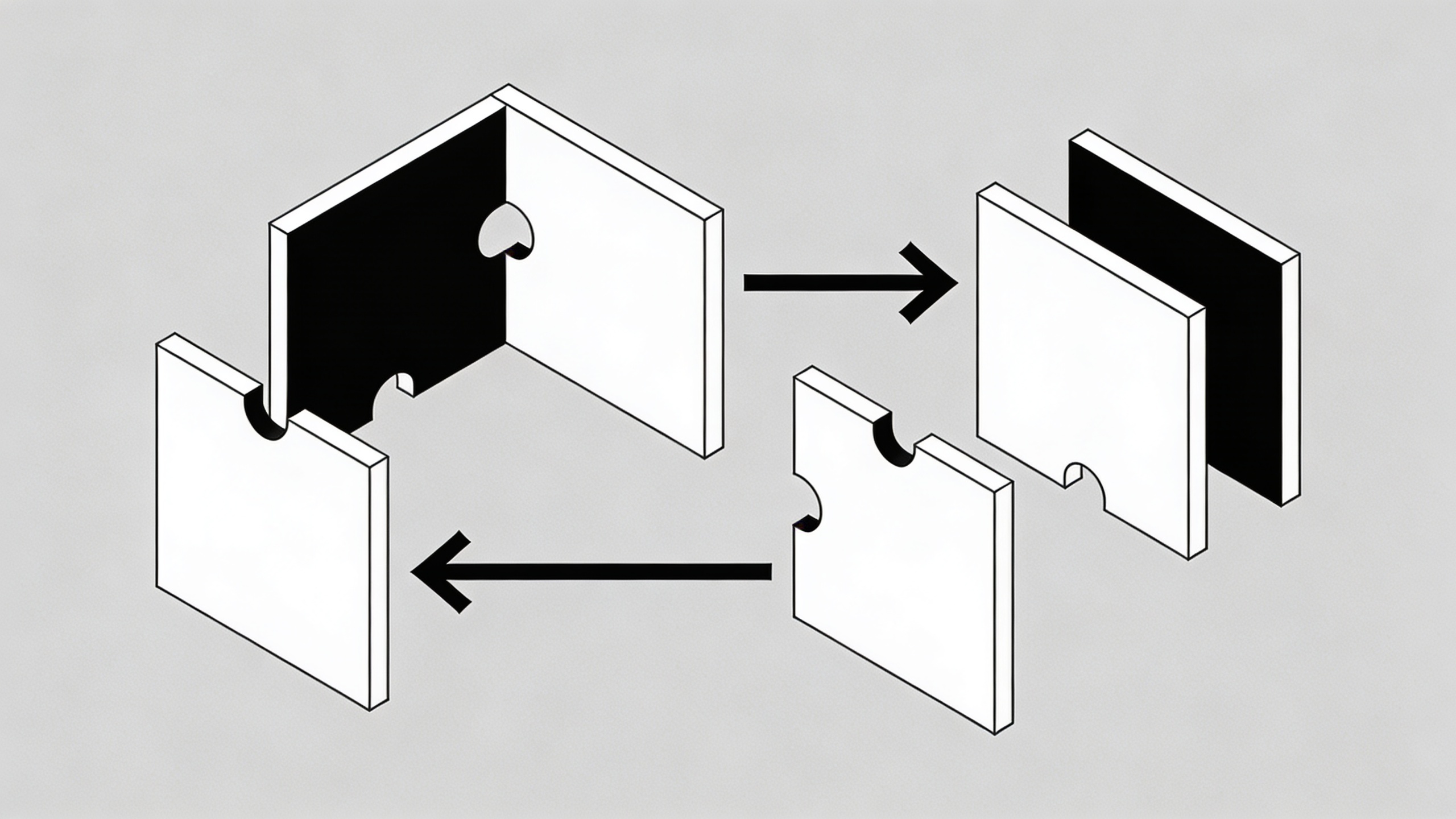
Why “Fixation” Makes It Impossible to Go Back
The scariest thing in management decisions isn’t the failure of the decision itself. It’s when, as a result of that decision, the organization or system becomes “fixed” and you can no longer reverse course.
For example, imagine you’ve promoted a talented employee to lead a new business venture. Six months later, the venture isn’t taking off, and you decide to pull the plug. But that employee is now the “Head of New Business,” with rising expectations from everyone around them. Their old position is already filled. So they end up in limbo, and eventually leave the company—this scenario is surprisingly common.
The real issue here isn’t the decision to exit the business; it’s that you “fixed” the person in that role. You solidified their title, expectations, and scope of responsibility without setting a trial period. This is the single biggest factor that robs management decisions of their reversibility.
The Three Hidden Risks of Fixation in Organizations
Through my work supporting organizational change in many small and medium-sized enterprises, I’ve noticed three main patterns of “fixation” that make management decisions irreversible.
1. Fixation of People
The risk here is that a simple phrase like “Let’s leave it to that person” can lock in someone’s career path and responsibilities. Especially in SMEs, key people often wear multiple hats, and once they’re fixed in place, untangling those roles takes enormous effort.
In one manufacturing client’s case, having the plant manager also serve as the head of a new venture led to a decline in quality for the existing business. The new venture never took off either, and it took six months to restore the original structure. During that time, the plant manager was burdened with the responsibilities of both roles, which took a heavy mental toll.
2. Fixation of Rules
“Once you create a rule, enforce it”—this sounds like sound management. But once a rule is made, it’s easy to miss the right time to review it.
Take the remote work policies introduced during the pandemic. They worked well in an emergency, but even after the legal classification of COVID-19 changed, many companies inexplicably kept the “three days in the office per week” rule. When rules become fixed, they can’t adapt to changing realities, leading to organizational rigidity.
3. Fixation of Tools
Introducing SaaS or business systems is another high-risk area for fixation. A tool you start using casually—”Let’s just try it out”—can become so deeply embedded in your workflows that you can’t cancel it. This is a common story.
The trickiest cases are when you’ve changed your business processes to fit the tool. Switching tools then requires overhauling the entire workflow, and the cost of that makes you stick with the status quo. This is a classic pattern of losing decision reversibility.
Three Design Principles to Prevent Fixation
So how can you prevent organizational fixation and ensure your management decisions remain reversible? Here are three principles I practice.
Principle 1: Set an “Expiration Date” for Roles
When you assign someone a new role, always set an “evaluation period.” Make the timeframe clear, like “Project Leader for three months” or “Head of New Business for a six-month term.”
The key is to frame this period not as “for evaluation” but as “to maintain organizational reversibility.” When the period ends, hold a review session to decide whether to continue, pull the plug, or change the approach. This prevents the person from becoming fixed in place.
Principle 2: Treat Rules as “Temporary”
When introducing new rules or systems, clearly label them as “trial runs” from the start. Frame them as “a three-month pilot” or “testing in just one department first” to give the rules themselves reversibility.
The advantage of this approach isn’t just that it makes rules easier to change. When team members see them as “temporary rules,” they’re less likely to rigidly adapt their behavior to them. It’s important to recognize that rules aren’t meant to be fixed; they’re “hypotheses” for observation and improvement.
Principle 3: Check “Cancellation Conditions” Before Adopting a Tool
Before signing up for a new SaaS or system, always check: “Under what conditions can we cancel?” “Can we export our data?” and “How dependent will our workflows be on this tool?”
Specifically, verify whether you can fully export data upon cancellation, if there are any contract lock-in periods, and what the migration cost to an alternative tool would be. Checking these things in advance allows you to operate without becoming overly dependent on any single tool.
Putting It into Practice: Management Decisions That Prevent Fixation
Now let’s look at how to prevent fixation in real-world management scenarios.
When Starting a New Venture
When launching a new venture, it’s crucial to define “exit conditions” upfront. Agree with your management team on specific criteria before you start, such as “We’ll exit if sales miss targets for three consecutive months” or “The maximum investment is $XX,XXX.”
Having these conditions in place allows you to make a冷静な撤退判断 when the venture isn’t taking off, without getting swept up in emotional arguments like “Let’s try a little harder.” And after the exit, it’s easier to return people and resources to their original state.
When Restructuring the Organization
Organizational restructuring is a classic example of a decision that’s hard to reverse once made. Merging or dissolving departments, personnel changes, delegating authority—all of these carry the risk of “fixing” people and the organization.
That’s why I recommend a “phased restructuring.” Instead of overhauling all departments at once, start with a pilot restructuring of just one department, observe the results, and then roll it out more broadly. Or, try the new structure as a “trial run” for three months before deciding whether to make it permanent.
By following this process, even if the restructuring fails, you can return to the original state. Leaders who prioritize speed often say “just move first,” but considering the risk of an irreversible failure, a phased approach is actually faster in the long run.
When Adopting a Tool
The same logic applies to tool adoption. Instead of a company-wide rollout from day one, start with a trial in one team or project, verify its effectiveness, and then expand.
Also, during implementation, always think about “what would happen to our work if we stopped using this tool.” If your workflows have become too dependent on the tool, you should either prepare an alternative or adjust your operations to reduce that dependency.
Don’t Fear Fixation—Design for Reversibility
In management decisions, “fixation” isn’t always bad. In fact, without some degree of fixation, an organization can’t function. The problem is when fixation becomes “irreversible.”
That’s why we, as leaders, need to design “room to go back” into every decision. Evaluation periods for personnel assignments, trial runs for rules, cancellation conditions for tools—these small, cumulative efforts increase organizational reversibility and, in turn, enable bolder management decisions.
It’s the peace of mind that comes from knowing “even if I fail, I can go back” that allows leaders to take risks. Conversely, when the risk of irreversibility is too high, we end up giving up on challenges altogether. That’s why designing for reversibility isn’t just risk management; it’s a strategic investment in organizational growth.
What fixation risks does your organization face right now? Take a moment to pause and ask yourself: “Is this something that truly needs to be fixed?” and “If it came undone, how far back could we go?” That single step will make your management decisions freer and more resilient.


Comments