- Grievances Themselves Are Not the Problem
- Management Decision Layer (Why)
- The Top Priority in Organizational Management is “The Customer”
- Why Frontline Voices Easily Become Institutionalized
- Specialist Implementation Layer (How)
- Design Principles to Prevent Grievances from Becoming Policies
- ① Treat Grievances as Primary Information
- ② Clearly Separate Temporary Measures from Permanent Policies
- ③ Create a Pathway to Return Decisions to Management
- What Happens in Organizations that Turn Grievances into Policies
- What Happens in Organizations that Keep Grievances as Observations
- Common Misconceptions
- Misconception ①: The Front Lines Won’t Be Satisfied Unless We Create a Policy
- Misconception ②: Improvements Won’t Progress Without Institutionalization
- Final Questions to Confirm with This Decision
- Summary (Without Providing a Single Answer)
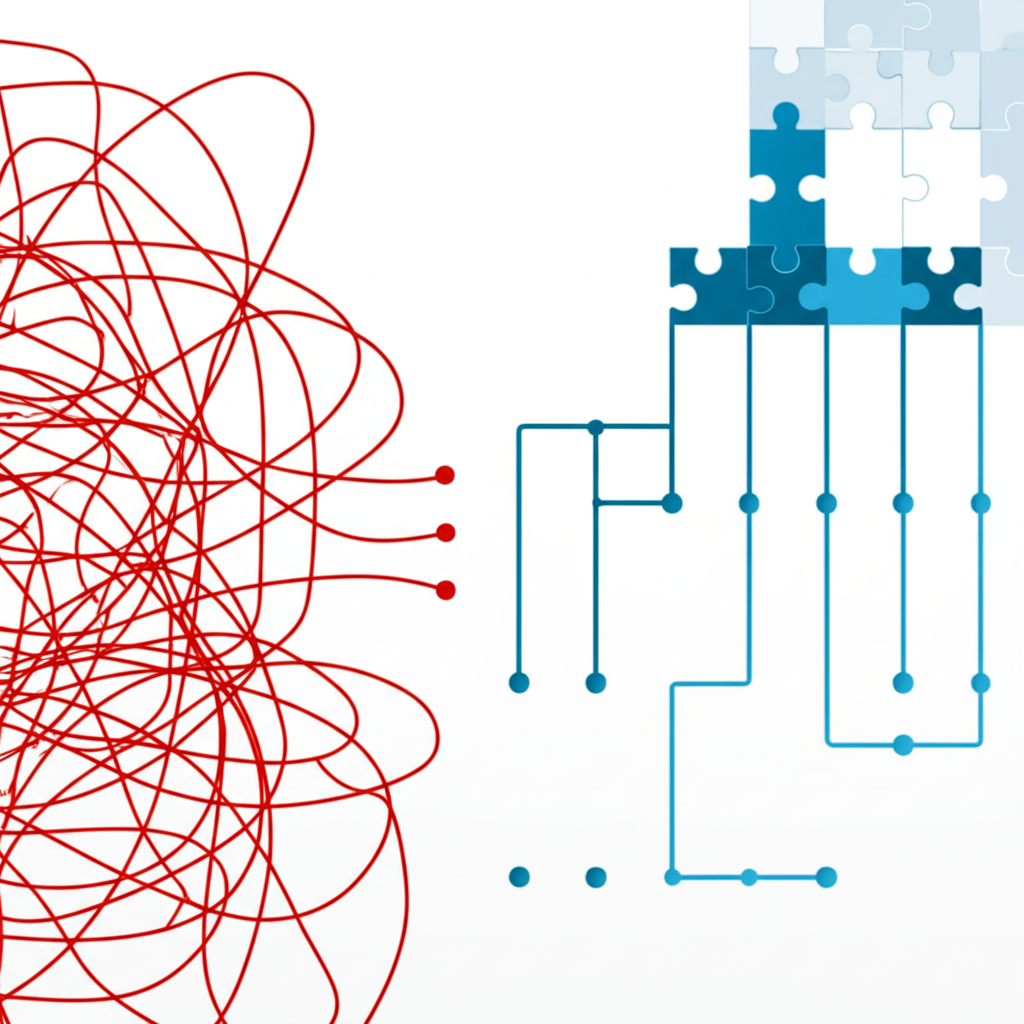
Grievances Themselves Are Not the Problem
It is natural for grievances to arise from the front lines in an active organization. Voices saying “this adds more work,” “decisions are too slow,” or “the rules don’t match reality” are actually signs that the organization is not stagnant. The real problem lies in how these grievances are handled.
Management Decision Layer (Why)
The Top Priority in Organizational Management is “The Customer”
First, it is necessary to clarify priorities. The top priority in organizational management is not employee grievances, but rather “whether value delivery to customers is maintained or improved,” “whether customer service is not delayed,” and “whether business credibility is being compromised.” This comes first. Listening to employee grievances is important, but it is always “secondary”—a topic to be addressed only after protecting customer value. Mistaking this priority leads to internal matters taking precedence over customer value, causing the organization to become inward-looking and policies to become ends in themselves.
Why Frontline Voices Easily Become Institutionalized
The background for why frontline voices easily turn into policies includes the following factors: “If left unaddressed, it looks like we’re ignoring them,” “It’s difficult to explain why we’re not taking action,” and “It’s easier to manage if we make it a rule.” However, it is crucial to recognize that “ease of management” and “rationality” are two different things.
Specialist Implementation Layer (How)
Design Principles to Prevent Grievances from Becoming Policies
To prevent the easy institutionalization of frontline grievances, the organization needs design principles such as the following.
① Treat Grievances as Primary Information
Organize the facts of “who,” “in what task,” and “under what circumstances” the grievance arose, focusing on facts rather than emotions.
② Clearly Separate Temporary Measures from Permanent Policies
Allow for time-limited responses, exceptional handling, and local rules, and explicitly state that these are “not policies.”
③ Create a Pathway to Return Decisions to Management
Grievances that cannot be resolved on the front lines are likely structural issues related to work design, decision-making structures, or authority delegation. Therefore, after gathering grievances, a clear pathway is needed to bring the discussion back to structural topics.
What Happens in Organizations that Turn Grievances into Policies
In organizations that directly turn grievances into policies, the following phenomena are more likely to occur.
- Policies continue to proliferate
- Exceptional handling becomes a policy violation
- The front lines begin to find ways around the policies
As a result, a reversal occurs where policies become detached from the reality of the front lines.
What Happens in Organizations that Keep Grievances as Observations
On the other hand, in organizations that treat grievances as observational data, the following differences emerge.
- The structural background behind grievances becomes visible
- A clear distinction forms between what should and should not be institutionalized
- Organizational changes are less likely to become personnel issues
Policies are positioned as “the adjustment tool of last resort.”
Common Misconceptions
Misconception ①: The Front Lines Won’t Be Satisfied Unless We Create a Policy
Satisfaction is determined not by the existence of a policy, but by “whether they felt heard” and “whether the reasons were explained.”
Misconception ②: Improvements Won’t Progress Without Institutionalization
Improvements do not necessarily have to start with a policy. Rather, institutionalization is the final step of improvement.
Final Questions to Confirm with This Decision
Is this grievance temporary or structural? Is it fatal not to make it a policy right now? Based on observation, is there room to reverse course? If you cannot answer these, that grievance may not yet be at the stage to be turned into a policy.
Summary (Without Providing a Single Answer)
Grievances are not problems; they are valuable observational data indicating the state of the organization. Easy institutionalization can lead not to problem-solving, but to problem entrenchment. The role of organizational design is to redirect grievances back to structural issues like business processes or delegation of authority. Protecting the front lines lies not in quickly creating policies, but in the design capability to prevent entrenchment. This is the core of reversible management decisions.

Comments