- The “We’ll Be Fine as Long as That Person is Here” Trap
- The Management Decision Layer (Why)
- Relying on an Individual Concentrates Risk
- The Choice to Rely on Structure
- The Specialist Implementation Layer (How)
- Design Required to Rely on Structure
- What Happens in Organizations with Strong Personal Dependency
- What Becomes Visible When You Shift to Structure
- Common Misconceptions
- Misconception ①: Structuring Makes Talented People Leave
- Misconception ②: “I’d Rather Trust People Than Structure”
- Final Questions to Confirm This Decision
- Summary (No Single Right Answer)
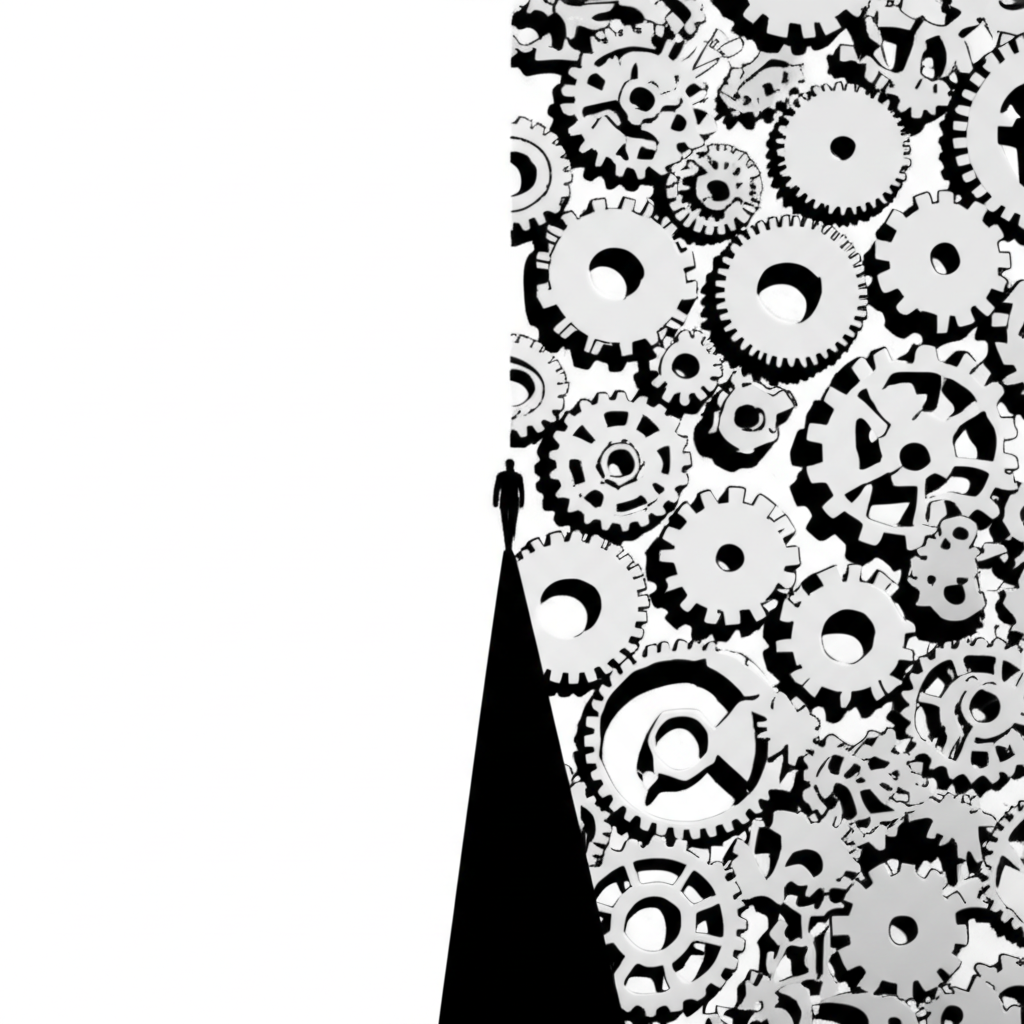
The “We’ll Be Fine as Long as That Person is Here” Trap
As an organization grows, a certain type of individual inevitably emerges: someone fast, decisive, and highly relied upon by others. Leaders often subconsciously start thinking, “As long as this person is here, we’ll be okay.” While this judgment may save the organization in the short term, it is also a decision that gambles the company’s future on a single individual.
The Management Decision Layer (Why)
Relying on an Individual Concentrates Risk
Choosing to rely on an individual may seem like an appreciation of their ability. However, from a structural perspective, it contains unguaranteed assumptions: that the person will always be with the company, will always make the same decisions, and will not burn out. Nevertheless, relying on an individual leads to the personalization of work, undocumented decision criteria, and a fixed state where there is no viable replacement when problems arise.
The Choice to Rely on Structure
Relying on structure means creating a state where operations run at a consistent standard regardless of who performs them, decision criteria are shared, and continuity is maintained even when people change. This is not about devaluing people; it is a management decision to maximize human capability within a framework.
The Specialist Implementation Layer (How)
Design Required to Rely on Structure
To rely on structure, at minimum, the following designs are necessary:
- Documenting decision criteria
- Clarifying workflows
- Separating judgment from execution
This makes individual decisions verifiable and successes/failures reproducible. As a result, the entire organization’s learning speed increases.
What Happens in Organizations with Strong Personal Dependency
In organizations dependent on individuals, the following phenomena tend to occur:
- Work stops when that person is absent.
- Others avoid making decisions.
- Process improvement stagnates.
This is not a problem with the individual’s capability, but a problem of the organization failing to create a structure.
What Becomes Visible When You Shift to Structure
When you switch to a design that relies on structure, the following becomes clear: in reality, much of the work requires no judgment, and an individual’s strengths are concentrated in only a few key decisions. Structuring reduces the load, and in many cases, you realize the fact that “it’s not a lack of people, but an over-reliance on them.”
Common Misconceptions
Misconception ①: Structuring Makes Talented People Leave
If people leave due to structuring, the problem is not the structure itself. The cause is often unclear expectations or ambiguous evaluation criteria. Structure can also be the foundation that allows talented people to continue performing at their best.
Misconception ②: “I’d Rather Trust People Than Structure”
Trusting people and not creating structure are separate issues. In fact, it is precisely because of structures—like proper organizational design and rules for delegation—that you can trust people with confidence.
Final Questions to Confirm This Decision
For this area of work, try answering the following questions:
- Does it fail to function without a specific individual?
- Can you explain the decision criteria to a third party?
- Is it designed on the premise that it will continue even if people change?
If you cannot answer these, you may be relying too much on an individual.
Summary (No Single Right Answer)
Relying on an individual concentrates risk, while relying on a structure enhances reproducibility. The key is not which is “correct,” but asking whether that management decision “holds up even if people change.” This is the first step in building reversible business processes. For SME management, shifting from personal dependency to structure is a crucial choice for sustainable growth.


Comments