- When the Voice “The Frontline is Struggling” is Heard
- Management Judgment Layer (Why)
- The Voice of the Frontline is “Observation Data,” Not a “Demand”
- Why Institutionalization Easily Becomes “Irreversible”
- The Decision to Keep Under Observation
- Specialist Implementation Layer (How)
- Perspectives to Confirm in the Observation Phase
- What Happens in Organizations that Rush to Institutionalize
- The Difference When Institutionalizing After Observation
- Common Misconceptions
- Misconception ①: Not Institutionalizing Means Disregarding the Frontline
- Misconception ②: Improvement Stalls During Observation
- Final Questions to Confirm for This Decision
- Summary (No Single Correct Answer)
- The Voice “This Tool Will Solve It”
- Management Judgment Layer (Why)
- Tool Introduction is a Decision That Easily Skips “Understanding”
- The Structure Where Tools Solidify “Demands”
- Specialist Implementation Layer (How)
- The “Observation” to Do Before Tool Introduction
- Why “Just Install It for Now” is Dangerous
- The Difference When Introducing a Tool After Observation
- Common Misconceptions
- Misconception ①: Not Installing a Tool Means Disregarding the Frontline
- Misconception ②: Tool Introduction is Reversible
- Final Questions to Confirm for This Decision
- Summary (No Single Correct Answer)
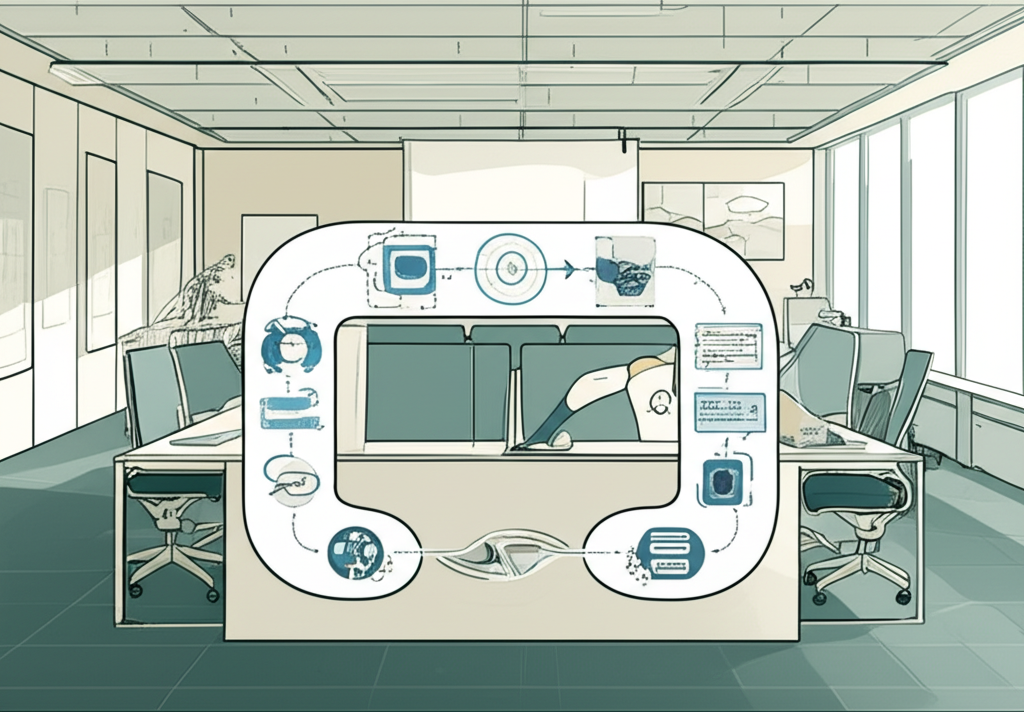
When the Voice “The Frontline is Struggling” is Heard
As an organization grows and operations become more complex, voices from the frontline inevitably arise: “This rule is hard to use,” “This workflow doesn’t match reality,” “We need better systems.” These are not wrong voices. However, the decision management makes at this point can send the organization in two very different directions: immediately institutionalizing the frontline’s voice, or temporarily accepting it and keeping it under observation. This difference in management judgment determines the organization’s flexibility and reversibility (the ability to revert).
Management Judgment Layer (Why)
The Voice of the Frontline is “Observation Data,” Not a “Demand”
When voices from the frontline arise, a common management pitfall is the belief that “since they are struggling, we must immediately solve it with a system.” However, from the perspective of “reversible management,” the frontline’s voice is not a demand to be instantly satisfied, but rather observation data indicating a distortion in the operational structure. Institutionalizing without determining whether the reason is a temporary increase in workload or a structural design flaw risks creating a system that solidifies the problem itself.
Why Institutionalization Easily Becomes “Irreversible”
Systems, once created, have the characteristics of “applying to everyone,” “incurring explanation costs for changes,” and “causing confusion if reverted.” Therefore, institutionalization tends to finalize a decision, turning what should be a hypothesis into a certainty through the system. This is a typical pattern where SMEs lose reversibility in their management decisions.
The Decision to Keep Under Observation
Keeping under observation does not mean doing nothing. It is an active decision to grasp the reality without institutionalizing, through measures like temporary exception handling, time-limited operational changes, or recording as data. This provides material to calmly judge “under what conditions the problem occurs,” “who is affected and to what extent,” and “whether it resolves over time.”
Specialist Implementation Layer (How)
Perspectives to Confirm in the Observation Phase
When treating frontline voices as observation data, organize them with the following points in mind.
- Frequency (How often does it happen?)
- Conditions (Under what circumstances does it happen?)
- Scope of Impact (Who is affected and to what extent?)
- Existence of Workarounds (Can it be handled without a system?)
Only after organizing these can you build a foundation for considering whether to institutionalize. This is a process that precedes effective organizational design and delegation of authority.
What Happens in Organizations that Rush to Institutionalize
Immediately institutionalizing frontline voices tends to cause problems like: the circumstances of one part of the frontline becoming the rule for all, new distortions arising in other areas, or systems proliferating until they become unmanageable. This is not the result of respecting the frontline’s voice, but the result of skipping the crucial step of observation.
The Difference When Institutionalizing After Observation
On the other hand, institutionalizing after sufficient observation allows for a limited scope of application, clear exception conditions, and design based on the premise of review. In this case, the system functions not as a “fixture” that locks down operations, but as an “adjustment mechanism” that can be adapted to the situation.
Common Misconceptions
Misconception ①: Not Institutionalizing Means Disregarding the Frontline
Keeping under observation is not ignoring the frontline. Rather, it is consideration to avoid robbing the frontline of flexibility and binding them through hasty institutionalization.
Misconception ②: Improvement Stalls During Observation
Improvement can still progress during the observation period through temporary measures and exception handling. The key difference lies in whether that response is permanently fixed or treated as material for learning and adjustment.
Final Questions to Confirm for This Decision
Before making a management decision, try answering these questions: “Is this voice a temporary complaint or a structural problem?” “Will not institutionalizing immediately lead to fatal consequences?” “Based on observation, is a reversible design possible?” If you cannot answer these clearly, there is likely room to keep it under observation before institutionalizing.
Summary (No Single Correct Answer)
The voice of the frontline is not a demand to be instantly institutionalized. Institutionalization is an act of solidifying judgment, while observation is a crucial management decision to preserve reversibility. What protects an organization is not the speed of responding to the frontline’s voice, but the judgment to avoid hastily fixing things. This is the core of reversible management judgment.
The Voice “This Tool Will Solve It”
When requests for operational improvement arise from the frontline, proposals often emerge like: “This tool is right for this task,” “We have too much manual work, we want a SaaS,” “Other companies use this tool.” These may seem rational and proactive at first glance. However, misjudging here risks turning the tool from a means of problem-solving into a device that solidifies the problem itself.
Management Judgment Layer (Why)
Tool Introduction is a Decision That Easily Skips “Understanding”
The reasons tool introduction seems attractive are clear: you get an immediate sense of change, it’s easy to explain, and it looks like you’re responding to the frontline. But behind this, the fundamental process of understanding “why this request arose” is often omitted. Introducing a tool without breaking down this reason leads to not understanding the true cause, preserving operational distortions, and causing other problems to surface.
The Structure Where Tools Solidify “Demands”
Immediately translating frontline requests into tools leads to temporary dissatisfaction becoming permanent rules, specific task methods becoming fixed, and difficulty explaining reasons to revert later. Once introduced, tools are treated as “premises” of operations, creating a structure where requests at the hypothesis stage remain in the organization as established facts.
Specialist Implementation Layer (How)
The “Observation” to Do Before Tool Introduction
When a frontline request arises, the first step should not be tool selection. It should be the following observation: “In which tasks, and what kind of burden is occurring?” “What is the frequency?” “Can it be avoided with temporary measures?” “Are there alternatives other than a tool?” Introducing without confirming this leads to a state where you cannot tell if the tool is solving the problem or merely hiding it.
Why “Just Install It for Now” is Dangerous
Tool introduction often seems reversible (able to be reverted). People think, “If it doesn’t fit, we can cancel,” or “We can switch to another tool.” But in reality, workflows become tool-dependent, frontline thinking becomes reliant on the tool, and “cancellation = regression” is perceived, making reversion difficult both psychologically and structurally.
The Difference When Introducing a Tool After Observation
Introducing a tool after observation clarifies the purpose, allows explanation for why it wasn’t used, and enables design with cancellation or review as a premise. In this case, the tool is treated as a “component” supporting systems or processes, not as a substitute for management judgment itself.
Common Misconceptions
Misconception ①: Not Installing a Tool Means Disregarding the Frontline
Not immediately introducing a tool is not disregarding the frontline. Rather, it is a prudent management judgment to avoid robbing the frontline of creativity and flexibility through hasty fixation.
Misconception ②: Tool Introduction is Reversible
Even if financially/contractually reversible, the premises of operations and employee thinking do not easily revert. This is a major factor impairing reversibility.
Final Questions to Confirm for This Decision
When considering tool introduction, confirm these questions: “Is this a structural problem or a temporary complaint?” “Is there room for observation without a tool?” “If not introduced, will it lead to fatal consequences?” If you cannot answer these, that frontline request likely is not yet at the stage to be turned into a tool.
Summary (No Single Correct Answer)
A tool itself is not a substitute for problem-solving. The premise that frontline requests are hypotheses, not established facts, is crucial. Skipping the observation step increases the risk of solidifying judgment and processes. Not hasty fixation, but prudent caution over speed of response. That is the core of tool introduction judgment for SME management growing while preserving reversibility.

Comments