- The Destination for Organizations That “Just Handled It with the System”
- Management Decision Layer (Why)
- Exception Absorption Becomes a “Device for Postponing Decisions”
- The Three Stages of System Complexity
- ① Exceptions Become “Configuration Items”
- ② Exceptions Become “Prerequisites”
- ③ No One Can Explain the Whole Picture
- Specialist Implementation Layer (How)
- What Happens as a Result of Continuing System Absorption
- The Difference from “Not Stopping Customer Service”
- Common Misconceptions
- Misconception ①: It’s Safe Because It’s Absorbed by the System
- Misconception ②: No Problems Are Occurring Now
- Final Questions to Confirm with This Decision
- Summary (No Single Correct Answer)
The Destination for Organizations That “Just Handled It with the System”
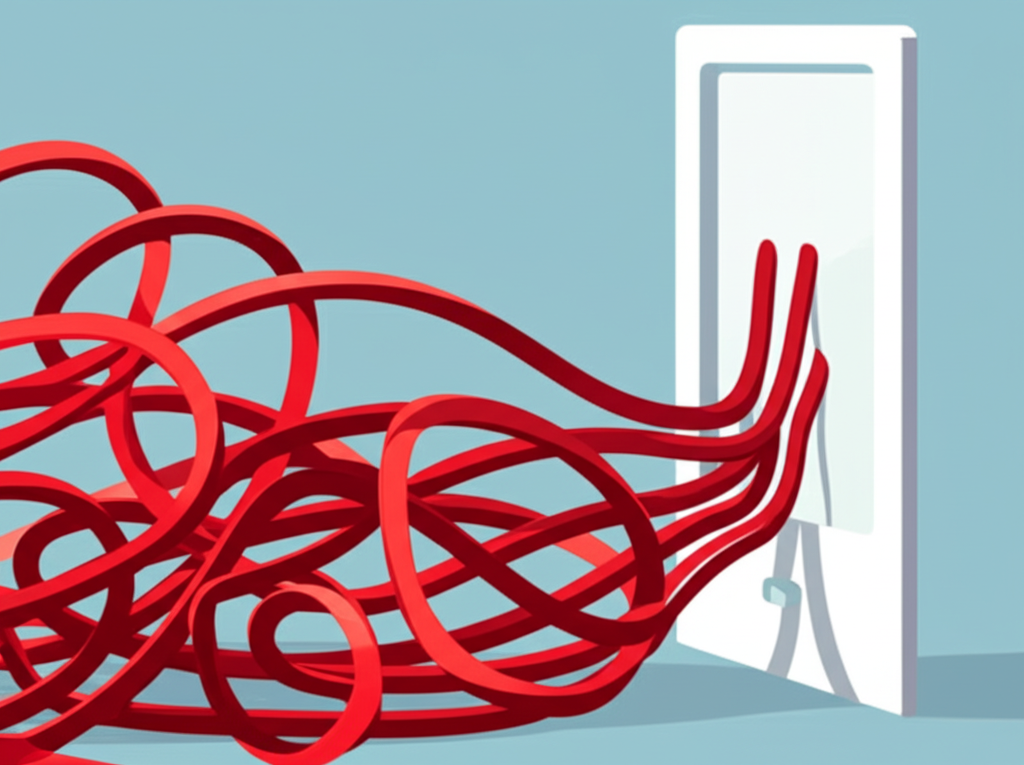
Every time an exception occurs, they add a flag, increase conditional branches, and incorporate special rules. There are organizations that repeatedly make the decision to continue absorbing all exceptions into the system this way. In the short term, it suppresses on-site confusion and keeps customer service running, so it may appear that they are “handling things well.” However, this choice quietly corners the organization.
Management Decision Layer (Why)
Exception Absorption Becomes a “Device for Postponing Decisions”
Absorbing exceptions into the system also means removing the exceptions themselves from being subjects of judgment. It resolves situations with technical fixes without asking questions like, “Why did the exception occur?”, “What was the principle?”, or “Should the principle be changed?”. If this attitude continues, principles are not updated, and a state where decisions do not accumulate is created.
The Three Stages of System Complexity
① Exceptions Become “Configuration Items”
Initially, exceptions are treated as temporary measures. Eventually, they begin to remain as checkboxes or options in the management screen. At this point, exceptions become a premise that “it’s okay for them to exist.”
② Exceptions Become “Prerequisites”
As exceptions increase, there are more exception flows than normal flows, reaching a state that newcomers cannot understand. The system begins to operate based on exceptions, not principles.
③ No One Can Explain the Whole Picture
Ultimately, the organization falls into a state where no one can explain “why this specification exists” or “what happens under which condition.” Once it reaches this point, an atmosphere of “being afraid to modify” and “it’s safer not to touch it” dominates.
Specialist Implementation Layer (How)
What Happens as a Result of Continuing System Absorption
As a result of continuously absorbing exception handling into the system, the following problems occur simultaneously.
- Business principles disappear.
- Reasons for decisions are not recorded.
- Standards for customer value become ambiguous.
Even though the system exists, a state exists where there is no axis for judgment.
The Difference from “Not Stopping Customer Service”
The important point is that “not stopping customer service” and “not updating principles” are not synonymous. It is reasonable to handle exceptions temporarily to avoid stopping customer service. However, leaving those exceptions in the system forever is akin to abandoning judgment.
Common Misconceptions
Misconception ①: It’s Safe Because It’s Absorbed by the System
It may only appear safe. There is a possibility that no one is making judgments and no one is taking responsibility.
Misconception ②: No Problems Are Occurring Now
Once a problem occurs, it’s too late. Risk is accumulating within the system.
Final Questions to Confirm with This Decision
When is this exception planned to be integrated into the principle?
Who is responsible for the decision to update the principle?
Is the exception recorded as a decision?
If you cannot answer these, the system may be substituting for judgment.
Summary (No Single Correct Answer)
When exceptions are absorbed into the system, judgment disappears. When judgment disappears, principles are not updated. A system without principles continues to grow more complex. Are you processing exceptions with the system, or are you postponing decisions? Discerning this is the core of this management decision.

Comments