- When This Decision Becomes a Problem
- Cases Where Policy Changes Cause Trouble
- The Policy is Treated as a “Promise” or the “Correct Answer”
- Policy is Directly Linked to Evaluation and Responsibility
- The Reason for Change is Explained as “Hindsight”
- Cases Where Policy Changes Do Not Cause Trouble
- The Policy is Treated as a “Judgment”
- The Scope of Impact from the Change is Clarified
- The Reason for Change is Explained as an “Observation”
- The Fundamental Difference Between the Two
- Questions to Rethink This Decision
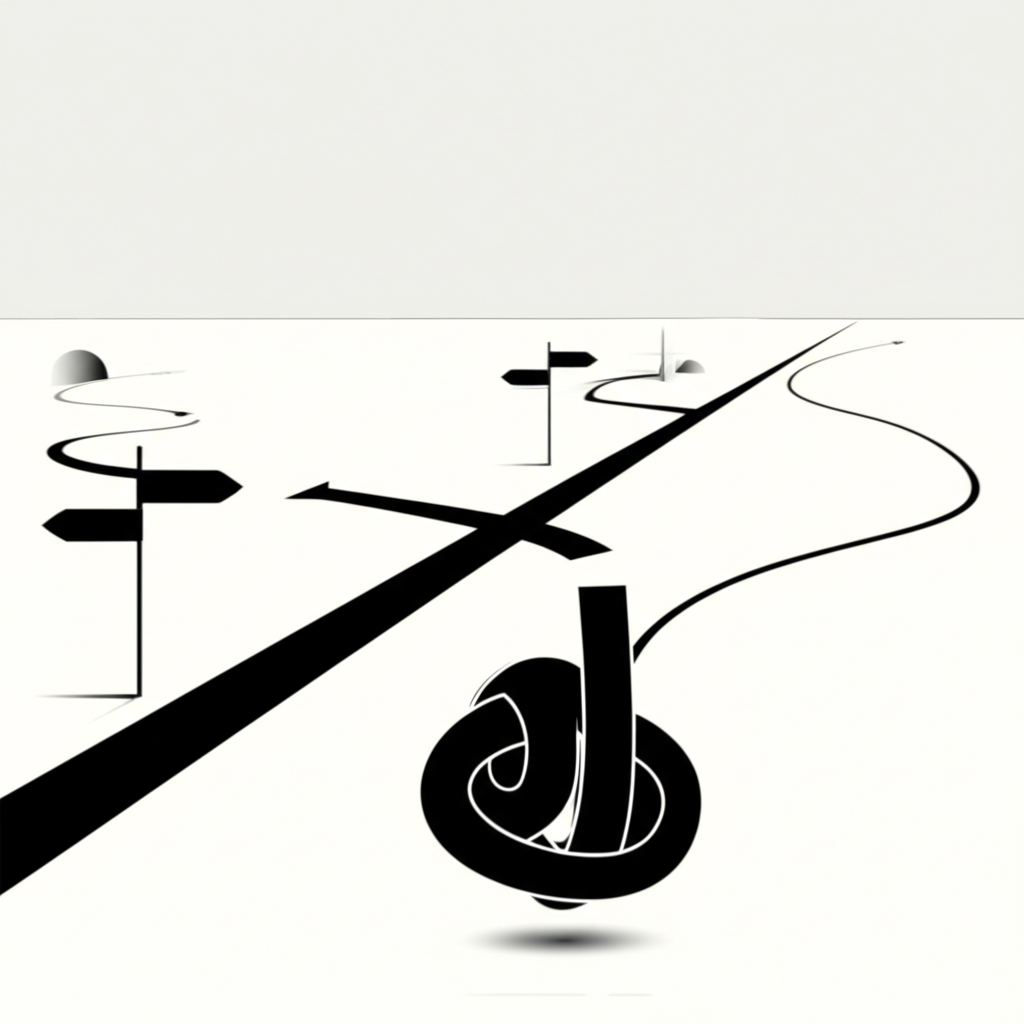
When This Decision Becomes a Problem
When market conditions or organizational circumstances change, creating a sense of unease about continuing an existing policy, or when expected results are not achieved and a revision seems more rational, a review of management decisions becomes necessary. However, concerns such as “Will changing the policy cause confusion on the front lines?”, “Will I be told this contradicts what I said before?”, or “Could this escalate into a responsibility issue?” often arise, leading to hesitation. The problem at this point is not the policy change itself, but whether there is a structure within the organization that causes the change to “turn into trouble.”
Cases Where Policy Changes Cause Trouble
In organizations where policy changes develop into disputes or conflicts, the following conditions are often present simultaneously.
The Policy is Treated as a “Promise” or the “Correct Answer”
When a policy is shared as an absolute directive without its background or premises being verbalized, any change is more likely to be perceived as a “breach of promise” or a “retraction of a previous statement.” This makes reversible management decisions difficult.
Policy is Directly Linked to Evaluation and Responsibility
When actions aligned with the policy are incorporated into the evaluation system, a policy change can undermine an individual’s legitimacy. As a result, a confrontational dynamic of “policy change = negation of someone” emerges, hindering healthy review of business processes.
The Reason for Change is Explained as “Hindsight”
Explanations like “We’re changing it because it didn’t work” or “We’re revising it because we failed” do not share *why* the change is happening now or *what* new information has been learned. This style of explanation is prone to triggering emotional backlash and requires particular caution in SME management.
Cases Where Policy Changes Do Not Cause Trouble
On the other hand, there are organizations where revising a policy does not create significant friction. In these cases, the following premises are relatively well-established.
The Policy is Treated as a “Judgment”
The policy is shared as a choice (a judgment) made under specific conditions, with a common understanding that “it will be reviewed if the premises change.” In this context, a change is positively received as an “update to a judgment,” enabling the practice of reversible management.
The Scope of Impact from the Change is Clarified
Because it is made clear in advance what will change and what will not, the change does not take the form of negating everything. Clarifying the scope of impact is part of effective organizational design linked with delegation of authority.
The Reason for Change is Explained as an “Observation”
Explanations like “Based on observing reality, the premises have changed” or “We’ve identified points that differ from our assumptions” focus on “what we have learned,” not on “what is correct” or “who is at fault.” This is a crucial business process for a learning organization.
The Fundamental Difference Between the Two
The dividing line between causing trouble or not is not the frequency of changes or the leader’s explanatory skills. The decisive difference lies in the organization’s fundamental premise: whether a policy is treated as a “fixed correct answer” or as an “updatable judgment.”
Questions to Rethink This Decision
To increase the reversibility of management decisions, it can be effective to ask yourself the following questions:
- Under what premises was this policy originally shared?
- Can the change in those premises be explained as an observation?
- Within the organizational structure, whose judgment is responsible for owning this policy change?
- Is the change a negation or an update?
If you cannot answer these questions, the problem likely lies not in the policy change itself, but in how the policy has been handled until now—that is, in the very structure of the organization’s decision-making and delegation of authority.

Comments