
The Choice of “Going Private” for Listed Companies
A recent Nikkei report on “Stock Delisting and Shareholder Consolidation for Faster Decision-Making” is a trend that many SME owners cannot afford to ignore.
Listed companies are consolidating shareholders and choosing to go private. The goal, according to the article, is “swift management decisions.”
Quarterly earnings reports, analyst briefings, shareholder meeting preparations. Listed companies bear enormous “explanation costs.” More than anything, short-term performance pressure becomes a drag on long-term strategy.
Going private is a way to free management from the pressure of making “irreversible decisions.”
For SME owners, going private might seem like a distant concept. However, the essence of this news lies in the question: “Who is constraining your decisions?”
The True Nature of “Irreversibility” Brought by Listing
There are three reasons why management decisions at listed companies become “irreversible.”
Obsession with Quarterly Results
The structure of being evaluated by the market every quarter pushes managers toward short-term thinking. Investments in new businesses or withdrawals from unprofitable ones are postponed if they affect quarterly figures.
In one company I advised, it took two years to decide to sell a loss-making division. The reason was the fear that “recording an extraordinary loss in the fiscal year would lower the stock price.” As a result, the division’s value declined further over those two years, and the final sale price was 30% lower than the initial estimate.
Listing robs you of the timing for “reversible decisions.”
The Weight of Accountability
As one goal of going private is “shareholder consolidation,” having numerous shareholders requires explanations for every management decision.
“Why are you shutting down this business?” “Why did you make this investment?” Time spent preparing explanations delays the decision itself. A delayed decision often exceeds the bounds of what is “reversible.”
An Atmosphere Where Failure is Unacceptable
For executives of listed companies, failure directly impacts the stock price. This pressure discourages “experimental decisions.”
As a result, they fall into a binary choice: either make a huge bet or do nothing. Neither is close to “reversible management.”
What SMEs Should Learn from the “Essence of Going Private”
So, what can SME owners learn from this news?
It is to re-examine the question: “Who is constraining your decisions?”
Pressure from Banks
Many SMEs rely on bank loans. Banks check quarterly performance and scrutinize any business that isn’t progressing as planned.
This mirrors the structure of listed companies’ shareholders. Banks may be forcing “irreversible decisions.”
I had a client who couldn’t decide to exit a new business and bled red ink for three years. When I asked why, the answer was, “We can’t explain it to the bank.” Meanwhile, their core business’s cash flow deteriorated, and they were eventually forced into a bank-led business sale.
The criterion of “Can we explain this to the bank?” robs management decisions of their reversibility.
Saving Face with Business Partners and Customers
Many managers continue unprofitable businesses for fear of the reputation that “that company shut down a business.”
However, this “saving face” is also a factor that makes decisions irreversible. It’s necessary to reframe withdrawal not as “defeat” but as “reallocation of management resources.”
A “Going Private” Mindset for “Reversible Management”
Going private is a means, not an end. What matters is “being freed from what constrains your decisions.”
Lengthen the Evaluation Period for Decisions
The strength of private companies is that they don’t have to be swayed by short-term results.
SMEs can adopt the same mindset. For example, set the evaluation period for a new business at “three years.” During that time, don’t get caught up in quarterly numbers; only look at long-term growth potential.
This “lengthening of the evaluation period” is what enhances decision reversibility. Because demanding short-term results leads to hiding failures or forcing numbers to fit.
Limit the People You Need to Explain To
The more shareholders you have, the higher the explanation costs. The same thing happens in SMEs.
Limit the people you consult about management decisions to the absolute minimum: just the board of directors, key shareholders, and your bank contact. This alone dramatically speeds up decision-making.
The thought “How do I explain this to that person?” slows down decisions and makes them irreversible.
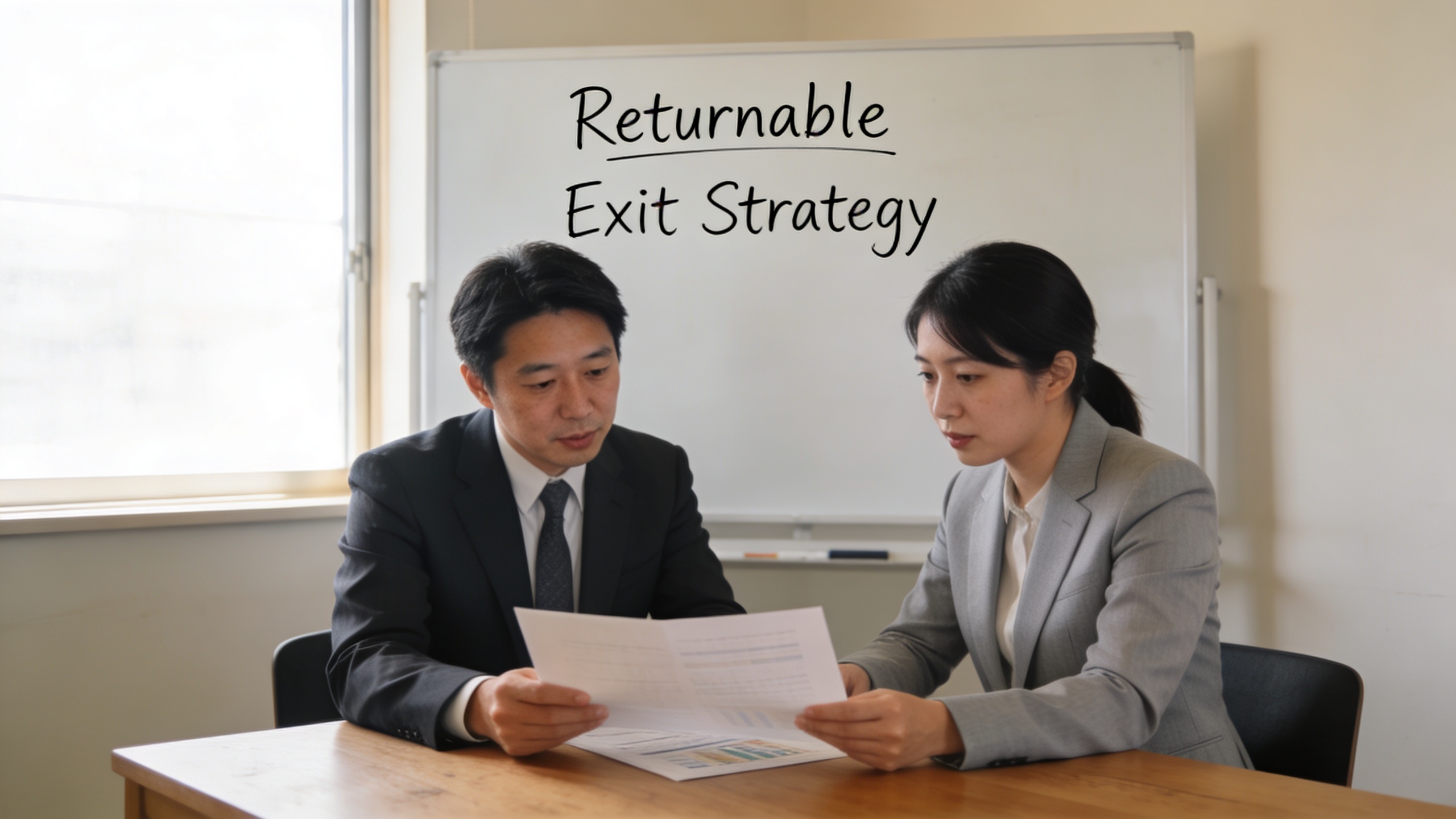
Set Exit Conditions in Advance
A key takeaway from the news about going private is the term “shareholder consolidation.” It highlights the importance of simplifying the decision-making process.
SMEs should also decide on “exit conditions” before starting a new business. For example, specific conditions like “withdraw if we have losses for two consecutive years” or “withdraw if sales fall below 50% of the target.”
By deciding these conditions in advance, the decision to exit is based on “facts” rather than “emotion.” As a result, you can end a failure while it’s still within a reversible range.
The Future of “Reversible Management” as Shown by Going Private
This news shows that we’ve entered an era where even listed companies are choosing to go private in pursuit of “reversible management.”
For SME owners, going public might be one goal. However, after understanding the “irreversibility” that listing brings, you should consider the management freedom your company truly needs.
Re-examining “who is constraining your decisions” is the first step toward reversible management.
Is your company the sovereign of its own management decisions, rather than being controlled by shareholders, banks, or business partners?
The option of going private is by no means exclusive to large corporations. Precisely because you are an SME, you should have the courage to carefully select “who to explain things to” in order to increase the reversibility of your decisions.
Reversible management is management with the freedom to make decisions. Why not take some distance from the things that rob you of that freedom?

Comments