- Why Do Large Corporations’ Organizational Restructurings Become “Irreversible”?
- Mitsubishi Electric’s North America Restructuring: The “Observation Period” for Back-Office Consolidation
- Rakuten’s “Re”-integration: The Past Separation Was Not a Failure
- Three Design Points to Make Organizational Restructuring a “Reversible Experiment”
- What Creates “Irreversibility” Is Not the System, But the Initial Setup
Why Do Large Corporations’ Organizational Restructurings Become “Irreversible”?
Mitsubishi Electric has implemented an organizational restructuring of three group companies in North America. The goals are consolidating back-office functions and optimizing manufacturing site assets. Meanwhile, Rakuten has resumed discussions on reintegrating its fintech businesses (banking, card, securities). At first glance, these moves seem like strategic advances, but were they “reversible decisions” for the executives?
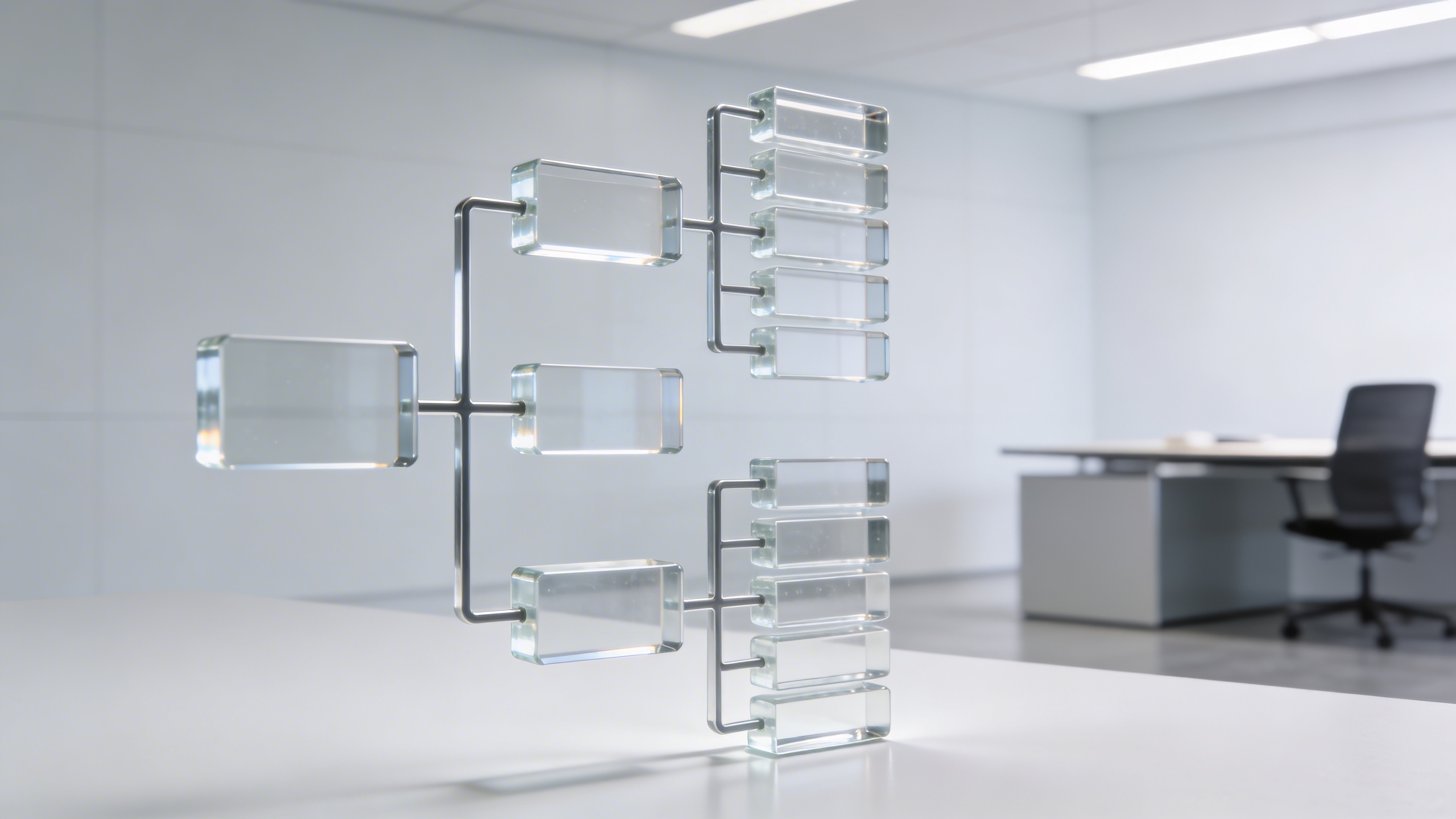
Large-scale organizational restructurings become difficult to reverse once executed. Personnel assignments, responsibility scopes, and reporting lines become fixed, making the psychological and practical costs of change enormous. But is that truly the case? By incorporating reversibility into the design, it is possible to transform organizational change from a “permanent fixture” into an “experiment.”
Mitsubishi Electric’s North America Restructuring: The “Observation Period” for Back-Office Consolidation
According to Mitsubishi Electric’s announcement, it will consolidate the back-office functions (accounting, HR, general affairs, etc.) of three group companies in North America. It will also advance asset utilization at manufacturing sites. The core of this decision lies in pursuing “economies of scale.” However, the issue is the implementation method.
The mistake many companies make is fixing the new organizational chart and positions all at once. This makes it extremely difficult to revert if the efficiency gains from consolidation are unexpectedly small or if operational disruption is too severe.
From a “reversible management” perspective, such restructuring should be designed as a “time-limited experiment.” For example, positioning the back-office consolidation as a “12-month pilot project.” Clearly define the metrics to observe during that period in advance. It’s not just about cost reduction. Consider changes in decision-making speed, trends in employee satisfaction, and the friction coefficient in inter-departmental collaboration.
The most crucial step is to establish “exit criteria” beforehand. Set objective triggers such as “if cost reduction falls below 60% of the initial plan” or “if turnover of key personnel exceeds X number.” This transforms the restructuring from a mere “let’s try it” venture into a verifiable hypothesis test.
Rakuten’s “Re”-integration: The Past Separation Was Not a Failure
Rakuten’s discussions on reintegrating its fintech businesses (banking, card, securities) are highly instructive. These businesses were once separated. If reintegration proceeds, could we say the past separation decision was a “mistake”?
From the perspective of “reversible management,” that’s not necessarily the case. The past separation decision was likely the optimal “experiment” for the environment at that time (regulations, growth stage, management resources). The separation may have increased each business’s agility and specialization, revealing new challenges (e.g., difficulty in providing cross-cutting customer services). Precisely because of this, the next experiment of “reintegration” is now being considered.
This process itself is proof that decision reversibility is functioning. The problem lies in the cultural and psychological bias of viewing the past separation as a “final decision” and perceiving reintegration as an “embarrassing policy shift.” Rakuten’s case is a good example of overcoming this bias and flexibly reviewing organizational design in response to environmental changes.
The lesson for SME leaders is clear. When launching new ventures or separating departments, avoid declaring, “This is a permanent structure.” Instead, position it as “a provisional structure for the next two years to address current challenges.” This simple shift changes a future review from an “admission of failure” to “the planned next step.”
Three Design Points to Make Organizational Restructuring a “Reversible Experiment”
So, how can SMEs translate the moves of large corporations like Mitsubishi Electric and Rakuten into practical actions? Here are three concrete design points to ensure reversibility in organizational change.
1. Define “Roles,” Not Just “Positions”
The most difficult aspect to reverse in restructuring is assigning formal positions/titles to people. Positions fix status and authority, and their removal is often perceived as a personal rejection.
The alternative is to define “roles” based on projects or operational scopes. Establish a role like “North America Back-Office Consolidation Project Leader” separately from existing positions. This role comes with clear goals, authority scope, and an evaluation period (e.g., 12 months). After the period ends, the role naturally dissolves or transitions to the next experimental phase. This allows changing the organizational form without damaging personal pride.
2. Observe with “Dual” Reporting Line Tolerance
Changes in reporting lines within a new structure cause confusion. Instead of an immediate, complete switch, a design that tolerates “dual reporting lines” for a set period is effective.
For example, members of a consolidated back-office department could report to the newly established overseeing department while also providing information to their former business unit heads in parallel. Designate this period as an “observation period” to monitor which line slows decision-making or creates differences in information quality. Determining the final reporting line based on actual observations leads to a more optimal structure, not one based on theory alone.
3. Calculate the “Cost of Preserving Options,” Not Just Efficiency Gains
The merits of restructuring are often judged solely by cost reduction figures. However, “reversible management” requires a different calculation: the “cost of preserving options.”
With a complete and irreversible restructuring, the cost to revert if the environment changes in the future is nearly infinite. On the other hand, a provisional restructuring with preserved reversibility (a pilot project) incurs some inefficiency (dual management, duplicate costs). This inefficiency *is* the “cost of preserving options.”
Management decisions should weigh short-term efficiency gains and cost savings against this “cost of preserving options.” In highly uncertain environments, the insurance premium paid for the latter can be well worth it.
What Creates “Irreversibility” Is Not the System, But the Initial Setup
Whether Mitsubishi Electric’s North America restructuring succeeds or Rakuten’s reintegration materializes is unknown at this point. However, the outcome is not the most important thing. What matters is whether they are designing these large-scale organizational changes as verifiable and adjustable “experiments.”
The moment an organization rigidifies and becomes unable to backtrack is when the change is announced as a “permanent system,” people are placed into fixed positions, and opportunities for evaluation and observation are discarded from the outset.
SMEs possess an agility that large corporations lack. When drawing a new organizational chart, declare it not as a “final decision” for eternity, but as a “provisional plan” until the next evaluation point. That single statement can guarantee managerial reversibility and become the most powerful adaptability to environmental change. The goal of organizational restructuring is not to create a perfect structure, but to gain the flexibility to constantly rewrite oneself in response to change.


Comments