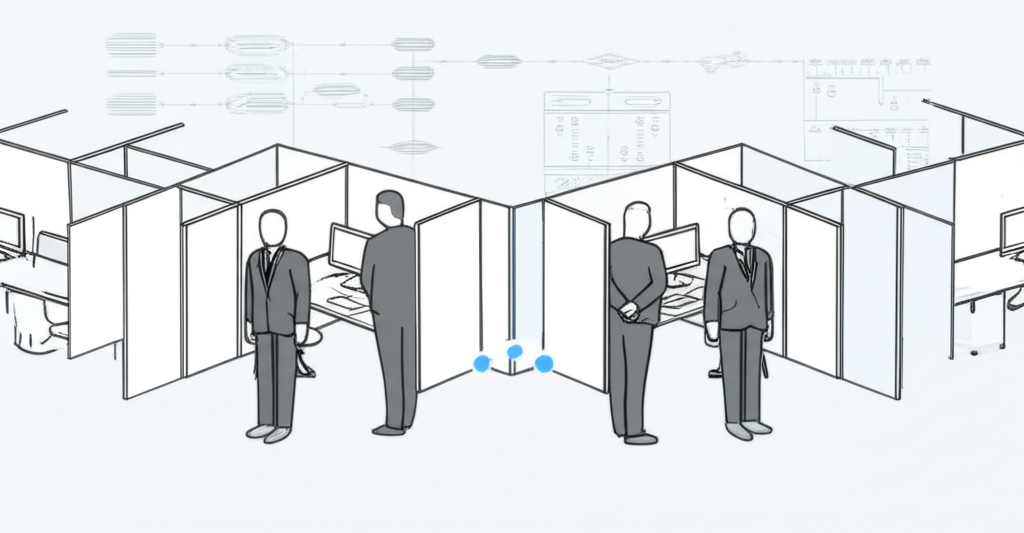
- The Uneasy Feeling: “We Changed the People, But Nothing Changed”
- Management Decision Layer (Why)
- People Take the Same Actions “Within the Structure”
- Three Structural Causes That Look Like People Problems
- ① Decision-Making Criteria Are Not Shared
- ② Responsibility is Ambiguous
- ③ Exceptions Have Become the Norm
- Specialist Implementation Layer (How)
- Questions to Check Before Changing People
- Cases Where Changing People is Necessary Also Exist
- Common Misconceptions
- Misconception ①: Hiring Good People Will Change Things
- Misconception ②: It’s Just a Lack of Training
- The Final Question to Check with This Decision
- Summary (No Single Answer)
The Uneasy Feeling: “We Changed the People, But Nothing Changed”
Even after going through hiring, reassignments, or sometimes terminations and replacements, and entrusting a new person with the expected role, you may be left with the feeling that “ultimately, the same old problems keep happening.” At this point, many organizations think, “Let’s hire a better person next time” or “Let’s review our evaluation and training,” attempting to fix things further on the “people” side. However, in organizations that don’t change despite changing people, the cause exists not in the people, but elsewhere.
Management Decision Layer (Why)
People Take the Same Actions “Within the Structure”
The reason an organization doesn’t change even when people do is simple: people act within the structure they are given. When decision-making criteria are ambiguous, responsibility boundaries are unclear, and principles and exceptions are not organized, anyone placed within such a structure is highly likely to get stuck at the same points, make the same judgments, and repeat the same failures. Changing people doesn’t change the outcome because the structure is reproducing the results.
Three Structural Causes That Look Like People Problems
① Decision-Making Criteria Are Not Shared
When what should be prioritized or what is acceptable is not verbalized, judgment is left to individual discretion. As a result, even when people change, the quality of decisions remains unstable.
② Responsibility is Ambiguous
When it’s unclear who the final decision-maker is, or how to handle failures is not defined. In this structure, newer people tend to become more cautious, leading to actions like postponing decisions or relying on precedent.
③ Exceptions Have Become the Norm
In organizations where principles are not organized, it becomes standard practice for decisions to change based on special, case-by-case handling. In this environment, as experience grows, person-dependent responses are reproduced, so changing people doesn’t change the outcome.
Specialist Implementation Layer (How)
Questions to Check Before Changing People
Before replacing people, check if you can answer the following questions.
- Would anyone making this decision be unsure?
- Are the decision-making criteria and priorities explicitly stated?
- If it fails, is there a design for where to fall back to?
If you cannot answer these, it’s highly likely that the decision to change people is merely postponing the problem.
Cases Where Changing People is Necessary Also Exist
Reversible management decisions (management that allows for retreat) do not attribute everything to structural problems. Non-compliance despite understanding clear standards, intentional rule-breaking, abandonment of responsibility. In such cases, a judgment to treat it as a people problem is necessary. What’s important is whether you questioned the structure first.
Common Misconceptions
Misconception ①: Hiring Good People Will Change Things
Good people tend to burn out within a broken structure. As a result, they often either leave quickly or get pulled into taking the same actions.
Misconception ②: It’s Just a Lack of Training
What training can supplement is knowledge and skills. Business processes like decision-making criteria and responsibility structures are issues of organizational design, not training.
The Final Question to Check with This Decision
Do the same problems occur even when people change? Can that problem be explained by the structure? Are there parts that can be fixed without changing people? If you cannot answer these, the organization may already be running on structure, not people.
Summary (No Single Answer)
Sometimes, the organization doesn’t change even when you change the people. The cause lies not in the people, but in the structure (organizational design and business processes). Changing people is the last resort. If you want to change the organization, ask yourself: have you reviewed the structure before looking at the people? That is the core of reversible management decisions in SME leadership.


Comments